Start with the geography. New Milford, Connecticut is not a place that produces viral baseball stars on an assembly line. It is where Dan and Laura Olson raised three children — Jackson, Alex and Ari — in a house where sport was serious but never selfish, and where the road to the Savannah Bananas began with a father who had already stood on major-league fields for a very different reason.
Dan played basketball at the University of Wisconsin-Oshkosh, then built a career with Rawlings, the glove manufacturer, presenting Gold Glove awards on the field to Derek Jeter, Robinson Canó and Mark Teixeira. Back home, he was something quieter: Jackson’s Youth Baseball Coach until his son was a teenager.
 (baseballmapper / Wikimedia Commons (CC0))
The Coach’s Rule: Everyone Belongs
Jackson’s memories of those teams are specific in a way that suggests they shaped him. His dad, he says, treated every kid on the team equally and made each of them feel they belonged. In youth sport, where playing time and parental ambition so often sort children into hierarchies by age ten, that is a philosophy — and it reads now like an early draft of Banana Ball itself, a form of baseball built on the idea that everyone in the park, players and fans alike, is part of the show.
The playing path ran through College Baseball at the University of Hartford and Stetson University — respectable programmes, real competition, and then the familiar cliff edge: Jackson hoped for the MLB Draft, and the draft passed him by.
 (John Phelan / Wikimedia Commons (CC BY 4.0))
The Detour That Became the Destination
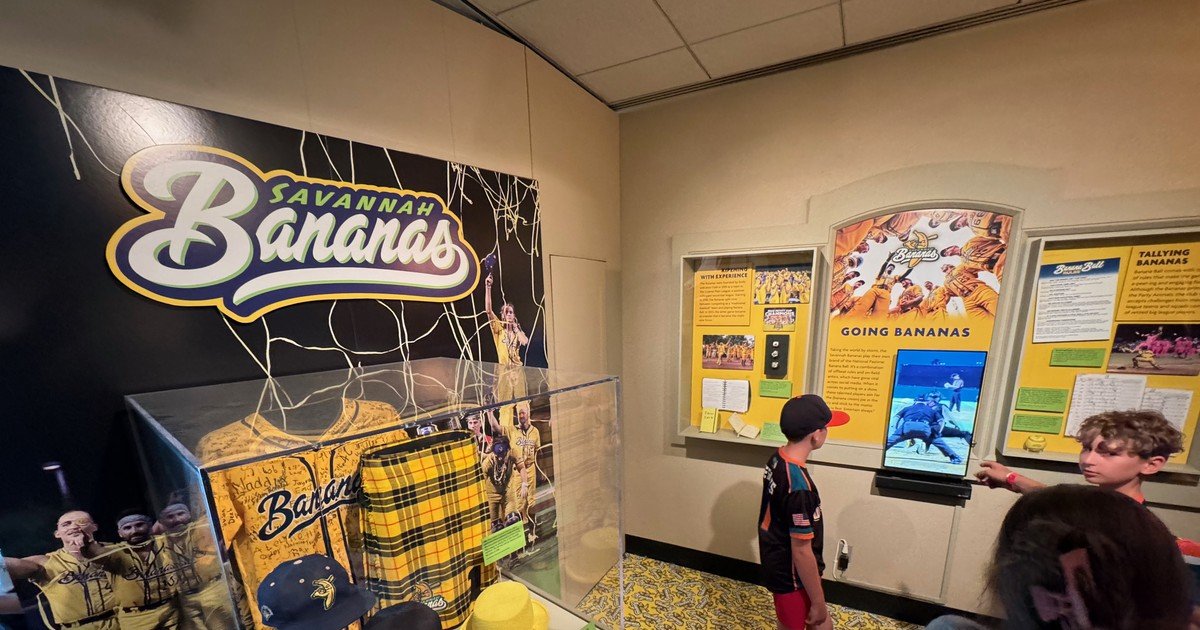
What happened next is the distinctly modern part of the story. Jackson built audiences on TikTok and Instagram by showing baseball as joyful, accessible and funny — in effect, performing the version of the sport his father’s coaching had always implied. The Savannah Bananas, the Georgia Exhibition Baseball phenomenon packing Grayson Stadium and stadiums far beyond it with dance routines and celebrity cameos, signed him in 2022.
His parents, by his own joking admission, did not initially understand what a social-media career was. Their response is the detail that elevates this from biography to something warmer: they supported it before they understood it. Now they are regulars at games and recurring characters in his videos — family trips, an Epcot outing, surprise visits home — building a second, gentler fame as the approachable parents of a very public son.
 (HickoryOughtShirt?4 / Wikimedia Commons (CC BY-SA 4.0))
Dedication Night, and What Laura Said
The family’s latest chapter is unfolding on Dancing with the Stars, where Jackson competes in season 35 with Emma Slater. Ahead of the show’s October 2026 Dedication Night, Laura appeared in a video alongside Jackson and Slater — the generations of his career, family and television, sharing one frame.
Laura told PEOPLE the family is proud of Jackson, and especially proud that he has stayed genuine and true to himself. Coming from parents who watched a conventional dream (the draft) dissolve and an unconventional one (banana suits, viral videos, a ballroom) assemble itself in its place, that pride carries weight. The Olsons did not raise a brand. By every account in this story, they raised a person — and then stood close enough, and loosely enough, to let the brand happen around him.
The Party Animals will keep touring, the Bananas will keep dancing, and season 35 will keep spinning. Somewhere in the stands, or in the next video, will be Dan and Laura — the Gold Glove presenter and the mother who says the quiet part out loud — watching the kid from New Milford belong, completely, on the biggest fields he could find.
Two Baseball Worlds, One Household
Few families can claim a foot in both of baseball’s centuries. Dan Olson’s Rawlings years belonged to the game’s classic world: leather gloves, gold trophies, on-field ceremonies with Derek Jeter. Jackson’s Banana Ball belongs to the game’s newest world: choreographed dances, social-media fame, a ballpark experience closer to a music festival than a doubleheader. That one household produced ambassadors for both says something about how completely the sport has changed within a single generation — and how the values underneath, belonging and joy in the game, did not change at all.
The draft system would have sorted Jackson out of professional baseball entirely, as it sorts out thousands of capable players every year. The audience economy caught him instead. It is tempting to call that luck, but luck favours the prepared entertainer: Jackson had spent years filming, posting and learning what strangers found joyful about his game, long before the Bananas came calling in 2022. His parents’ contribution was subtler — a home where performing for others was never treated as showing off, and where trying something unexplained was not treated as failure.
That is why this profile resonates beyond one team’s fanbase. Every family now contains some version of the Olsons’ dilemma: a child whose opportunity arrives in a form the parents do not recognise. Dan and Laura’s answer — support first, understanding later — turned out to be the whole playbook.
The Connecticut thread deserves one more pull. Jackson was born in 1997 and raised in New Milford with his brother Alex and sister Ari — not in a baseball academy, not in a showcase circuit, but in an ordinary sporting household in a small New England town. Dan’s Gold Glove ceremonies gave the family a glimpse of the game’s summit, yet the household’s own sporting culture stayed stubbornly local: school teams, youth leagues, a dad on the coaching staff. That Jackson’s fame now runs through Georgia ballparks and Hollywood ballrooms, while his origin story remains a Connecticut town and a fair-minded coach, is not a contradiction. It is the entire explanation.