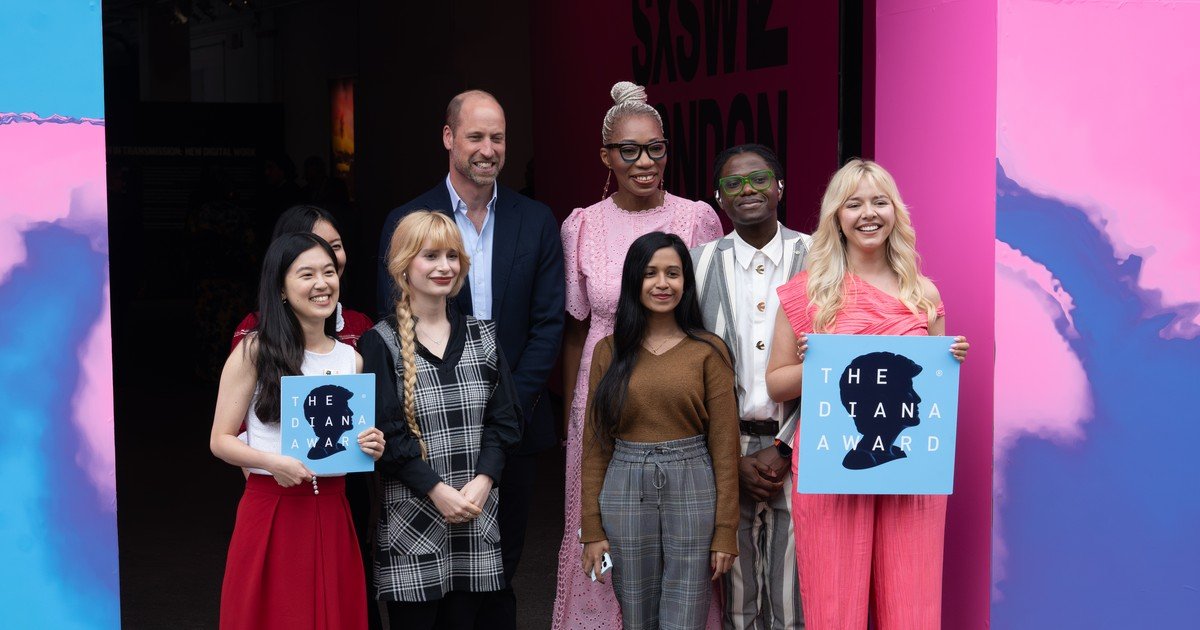
For a man who has spent his entire life learning how to control a room, Prince William has never faced a room quite like this one. The red sofa of The Graham Norton Show is famous for turning polished celebrities into giggling guests — and on Friday, Oct. 23, the Prince of Wales became the first royal in the program’s long history to sit down on it. A genuine royal first, delivered as a complete surprise to the audience.
The chat show, recorded on Thursday and broadcast Friday night on BBC One at 10:40pm, devoted its entire lineup to William’s Earthshot Prize. Host Graham Norton, 63, began the evening chatting with Cate Blanchett, Hannah Waddingham, and conservationist Robert Irwin — each of them tied to the environmental prize — before revealing the thread that connected them all. Then the Prince of Wales walked out, to cheers and audible gasps from a crowd that had no idea he was coming.
 (Vbrunophotog / Wikimedia Commons (CC BY-SA 4.0))
Why a Chat Show, and Why Now
The choice of venue was deliberate. The episode was a special Earthshot edition, designed to carry the prize’s message — pairing urgency with optimism — to the biggest possible Friday-night audience. William explained that the Earthshot Prize, which he founded in 2020, grew out of his frustration with the gloom surrounding environmental news. “For many years I was hearing stories about environment issues and one thing that struck me was the negativity and doom which got me down,” he told Norton. “I thought we could do something more powerful and more optimistic.”
The timing was strategic too. The show aired just weeks before the annual Earthshot prize night in Mumbai in November, and days after the Oct. 22 announcement of the 15 finalists of the inaugural I CAN Earthshot Challenge, celebrating young changemakers aged 9 to 17 from across India, with winners receiving a $2,000 grant. William also recently launched his Children’s Earthshot ahead of his trip to India — the Norton appearance was the soft-power bookend to a busy season of announcements.
An Hour of Carefully Planned Informality
Royal watchers know that the monarchy usually communicates through speeches, documentaries, and tightly controlled interviews built around specific causes. A mainstream entertainment chat show is the opposite of all that — unscripted, playful, and famously good at coaxing out the unguarded moment. That is precisely why this pre-recorded appearance matters: Kensington Palace clearly decided the Prince of Wales could handle the format, and trusted Norton with one of the most valuable commodities in royal communications — spontaneity.
 (Damien Everett / Wikimedia Commons (CC BY 2.0))
William repaid that trust with charm. He talked about unwinding with “music and film,” revealed the family’s obsession with The Celebrity Traitors — “Charlotte and Louis are obsessed with it” — and confessed himself a devotee of director Christopher Nolan. “I’m a big fan of everything Christopher Nolan does,” he said. “The Dark Knight series is psychologically dark and deep and I absolutely love that. He takes concepts that are completely out there and makes them incredibly entertaining.”
The Prince, the DJ, and the Red Sofa Legacy
Perhaps the most human moment came when Norton asked about childhood dreams. William said he once wanted to be a police officer — or a DJ, a confession he immediately undercut with the admission that he “wasn’t very good” at it. It was the kind of self-deprecating aside that makes the Norton sofa work, and it landed exactly as intended.
Singer-songwriter Jorja Smith also appeared on Friday’s show, performing her current single for the audience. But the night belonged to the prince who wasn’t supposed to be there. By the time the credits rolled, the surprise had done its job: an environmental prize built on hope had been introduced to millions of viewers who tune in for laughs — and the first royal to brave the red sofa had made it look easy.
 (Carfax2 / Wikimedia Commons (CC BY-SA 3.0))
What the Palace Is Signaling
Read between the lines of the morning announcement and the message is unmistakable. Kensington Palace did not book the Prince of Wales onto a news program or a documentary — it put him on the biggest entertainment sofa in Britain, in a pre-recorded episode, surrounded by celebrities who could carry the conversation. The Instagram post went up hours before broadcast, timed to build anticipation rather than merely inform.
It is also worth noting what did not happen: no stiff interview, no podium, no press release doing the talking. William laughed, told stories about his children, and let Graham Norton do what he does best — which suggests a communications team increasingly comfortable letting the prince be a person first and an institution second. Expect more of this in the years ahead.