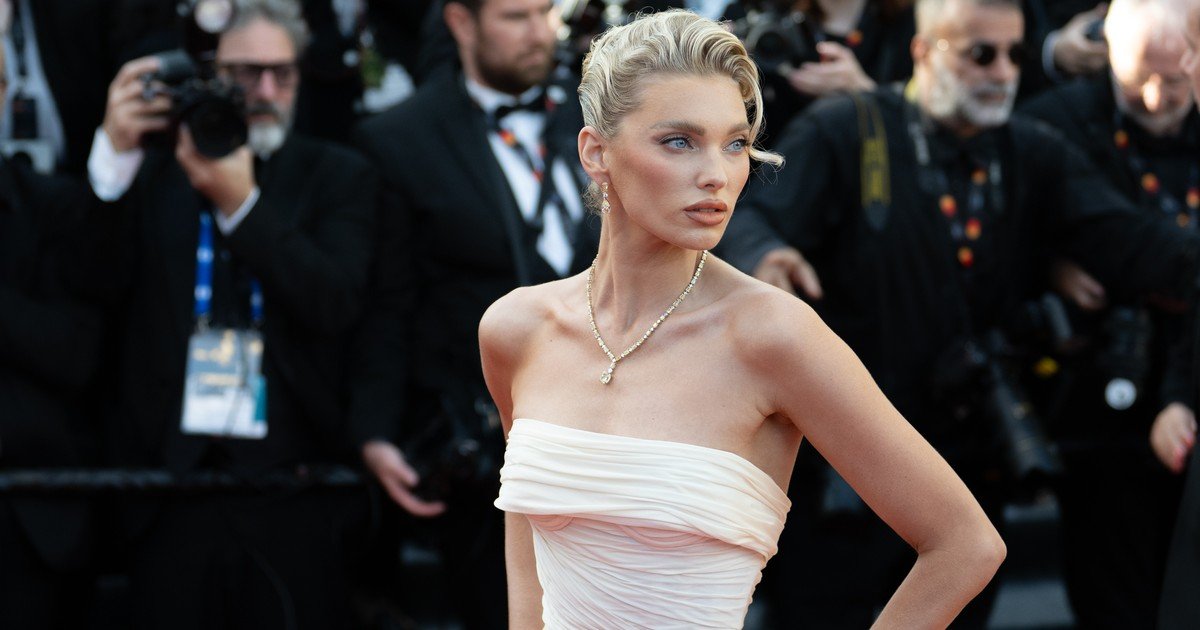
Seventy inches. That’s nearly six feet of wingspan — taller than most of the models wearing them — and this year it belonged to Elsa Hosk. Her golden wings at the 2026 Victoria’s Secret Fashion Show weren’t just the biggest of the night; they were a feat of engineering, built on a fully welded metal skeleton and finished by hand with individual fabric feathers. Here’s what actually goes into a showstopper pair of wings, and why the models who carry them deserve more respect than the internet gives.
From Sketch to Steel
Every pair of statement wings starts months before the show, when designers translate a fantasy — phoenix, butterfly, celestial — into something a human being can actually wear. The process is closer to aerospace than atelier: a wingspan is mapped against the model’s height and stride, then a metal framework is designed to distribute weight across the shoulders and back. For Hosk’s 70-inch pair, that framework was welded into a single rigid structure, then dressed with hundreds of individual feathers cut from fabric and placed by hand.
The numbers are startling. Gigi Hadid, defending Hosk this week, noted that modern wings can top 75 pounds and stretch past 10 feet tall — some even incorporate animatronic elements. Last year, Bella Hadid revealed her wings weighed 50 pounds. Jasmine Tookes wore some of the heaviest wings of the 2026 show. These aren’t accessories; they’re load-bearing sculptures, and the choreography of a show has to be built around them: longer pauses, wider turns, marks on the runway measured to the inch.
 (Mathieu Lebreton / Wikimedia Commons (CC BY 2.0))
The Fitting Is the Test Flight
Long before runway music starts, each model goes through fittings that double as engineering trials. The wings are mounted, the model walks, and the team watches for the two great enemies: balance and drag. A 10-foot wingspan catches air like a sail — add the gust of industrial runway fans, and a model is effectively steering a kite down a mirrored runway in stilettos. Straps are adjusted, counterweights considered, and the model’s own strength becomes part of the design spec. It takes three people just to lift the wings onto a model’s back.
Why They Keep Getting Bigger
The arms race is deliberate. As Hadid put it this week: “The wings are getting bigger bc the viewers love it.” She’s right — the spotlight moments that define each show, the images that travel the world, are almost always the biggest wings. The Fantasy Bra era was about jewels; the current era is about scale. Designers compete to outdo last year’s silhouette, and social media rewards the most extreme wingspans with the most replays. The result is a feedback loop: viewers cheer the giants, so the giants keep growing.
 (Paul John Bayfield, Timesniper.com / Wikimedia Commons (CC BY 2.0))
But scale has a cost, and this week’s discourse proved it. When a critic with a phone compares a 2026 walk to a 2006 one, they’re ignoring two decades of physics. The OG Angels carried smaller, lighter wings down shorter runways. Today’s models carry welded steel past 10 feet tall while the fans blast. The clapback from Hadid — and from Tookes, who noted critics had caught her at the exhausted end of her walk — was really a demand to judge the job as it exists now, not as nostalgia remembers it.
The Human Inside the Hardware
It’s worth remembering who’s inside the metal. Hosk walked this show months after giving birth to her second child. Tookes carried the heaviest wings of the night. These are athletes in encore-worthy performances, and the muse of the moment isn’t the wing — it’s the woman steering it. The body shaming that occasionally shadows these shows misses the point entirely: the story isn’t how the models look in the wings, it’s what it takes to move in them.
 (Mathieu Lebreton / Wikimedia Commons (CC BY 2.0))
Seventy inches of welded metal, hundreds of hand-placed feathers, three people to lift them on, one woman to carry them down the runway. The next time the wings look effortless, remember: that’s the hardest trick in the show.
The 2026 Arms Race in Numbers
Put this year’s wing statistics together and the scale of the spectacle becomes clear. Hosk’s pair: 70 inches high, the biggest of the show, on a welded steel frame. The ceiling, per Hadid: wings topping 75 pounds and stretching past 10 feet, some with animatronic elements. The removal crew: three people per model, minimum. Last year’s benchmark: Bella Hadid’s 50-pound pair. The heaviest of 2026: Jasmine Tookes’s set. Every number trends in one direction — up — and every number makes the same point: the modern Victoria’s Secret runway is an engineering showcase that happens to involve fashion.
Consider what those numbers demand of the wearer. A 75-pound load, balanced on the shoulders, carried down a long mirrored runway in heels, while industrial fans create unpredictable gusts across a 10-foot sail. The walk has to be choreographed around the wings rather than the other way around — wider turns, measured strides, pauses placed where the balance is surest. Viewers see a few seconds of glide. The models feel every ounce of it. When Hadid wrote “y’all have no clue,” the numbers suggest she was being literal.