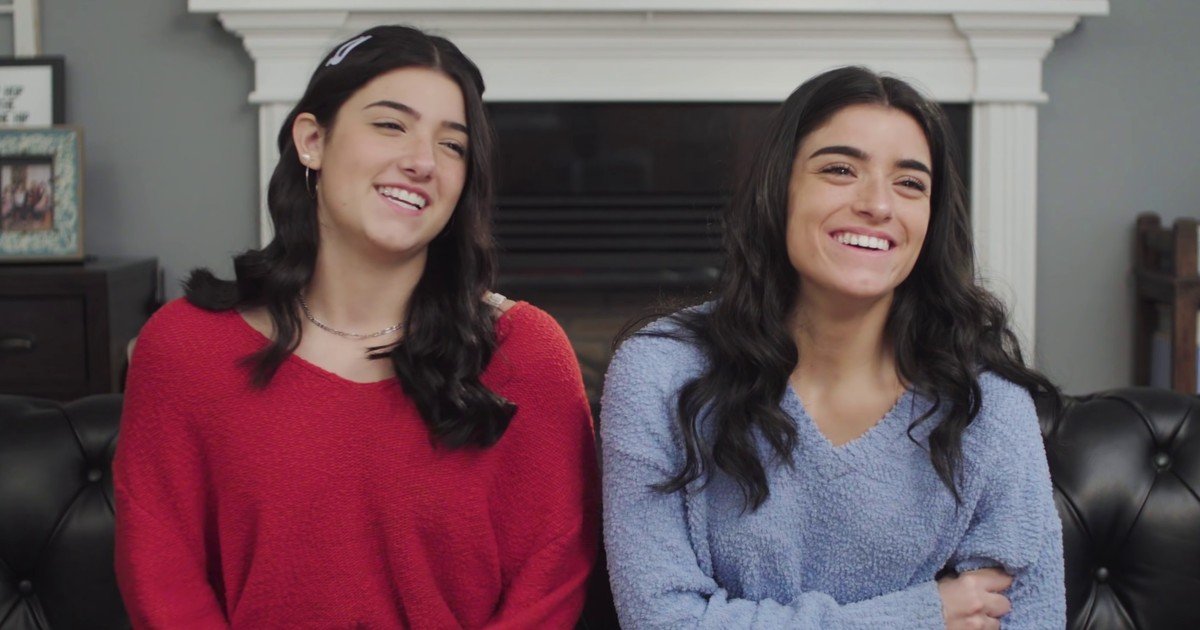
Every era of fame produces its own characteristic rumor, and ours is the family-money rumor: the whisper that the people who raised a young star also robbed her. It attaches itself, sooner or later, to almost every performer who got famous young inside a family operation. This year it attached itself to the D’Amelios — and this week, after a five-month run through the Online Rumor Mill, it finally met the one person who could answer it. Charli D’Amelio, asked directly by The Hollywood Reporter whether her parents mishandled her money, said the rumors are not true and that she would not say they stole her money. Her father had already denied the claim months earlier. Case, in any fair reading, closed. The more interesting question is why it ever felt open.
The Audience That Thinks It Lives There
Start with the relationship between Charli and her followers, because it is not the old kind. She did not arrive through a studio system that kept her at a distance; she arrived through a phone camera in a family home, dancing in rooms her audience came to recognize like their own. That intimacy produces Parasocial Fandom of unusual intensity: millions of people who do not merely admire her but feel a kind of tenancy in her life, entitled to explanations when the furniture seems to move.
When those followers noticed that Charli and her parents no longer followed each other on Instagram, they did not register a private family matter. They registered a plot development — and when a gossip account then alleged that millions had been transferred out of her accounts, the plot seemed to confirm itself. An unfollow is data the way a raised eyebrow is data. It can mean a rift; it can mean a rebrand, a hacked account, a tidy-up, nothing. The rumor treated it as a confession, and the audience, primed by years of feeling like insiders, largely went along.
 (NickRewind / Wikimedia Commons (CC BY 3.0))
The Family Business Problem
None of this is to say the underlying subject is trivial. The D’Amelios built a Family Business at extraordinary speed, and Young Creator Finances are a real and under-examined issue: children can now generate fortunes before they can legally sign the contracts that govern them, and the adults holding the pen are usually their parents. Legislators, of late, have begun paying attention for exactly that reason. It is entirely legitimate to ask how money earned by a teenage creator should be held, shared and accounted for.
But a legitimate policy question and a specific accusation are different species of claim, and the D’Amelio saga shows how easily the first gets used to launder the second. “Families like this have had problems before” is not evidence about this family. Against the general suspicion stands specific testimony: Marc D’Amelio denying the reports in public, in writing, promising receipts; his daughter, months later, declining every invitation to blame her parents and saying instead, “I think we did a lot of things as a family.” A fair reader holds both pieces at once — the structural concern is real, and this particular rumor has been denied by everyone it accuses and everyone it claims to defend.
Fame’s Oldest Second Act
There is also something poignant in the timing. Charli is deep into fame’s second act: the Brand Deals and business ventures continue, but so does a deliberate broadening — most strikingly her Broadway debut in & Juliet on October 29, 2024, a move that asked to be judged on craft rather than follower metrics. The D’Amelio Show made the family itself the product; the stage makes Charli, alone, the performer. Growing up in public was always going to involve drawing new boundaries around the family that fame built.
 (Priyanka Pruthi / Wikimedia Commons (CC BY 3.0))
Seen in that light, even the dreaded unfollow reads differently. A young woman in her twenties separating her public accounts from her parents’ may be doing nothing more sinister than what every adult child does offline — establishing which parts of life are shared and which are simply lived. The internet, which measures love in Follower Count and loyalty in follows returned, is badly equipped to tell the difference. That is partly a failure of Media Literacy, and it is one the platforms have little incentive to fix: suspicion, after all, engages.
What a Denial Is Worth
Skeptics will note that denials are cheap, and they are right that a denial alone settles nothing in the abstract. But the comparison here is not between a denial and proof; it is between a denial and an anonymous, undocumented tip. On one side of the scale: a gossip post that alleged transfers no one has ever substantiated, amplified by an unfollow that proves nothing. On the other: a father who signed his name to a rebuttal in the rumor’s own comment section, and a daughter who, given a national platform and a direct question, used it to clear her parents rather than to feed the story that has shadowed her family since May.
 (NickRewind / Wikimedia Commons (CC BY 3.0))
Charli D’Amelio became the most famous teenager on her platform by mastering the Dance Challenge — a format in which everyone performs the same steps and the audience decides whose version feels true. The rumor cycle asked her to perform a different routine: the wounded child star, turning on the parents who managed her. She declined the part. “I think we did a lot of things as a family” is not the language of a victim or a press release; it is the language of someone describing a shared enterprise she still recognizes as hers. After six years of the family staying silent about gossip, as her father put it, this was Setting the Record Straight — quietly, jointly in spirit if not in the same room, and, one hopes, finally.