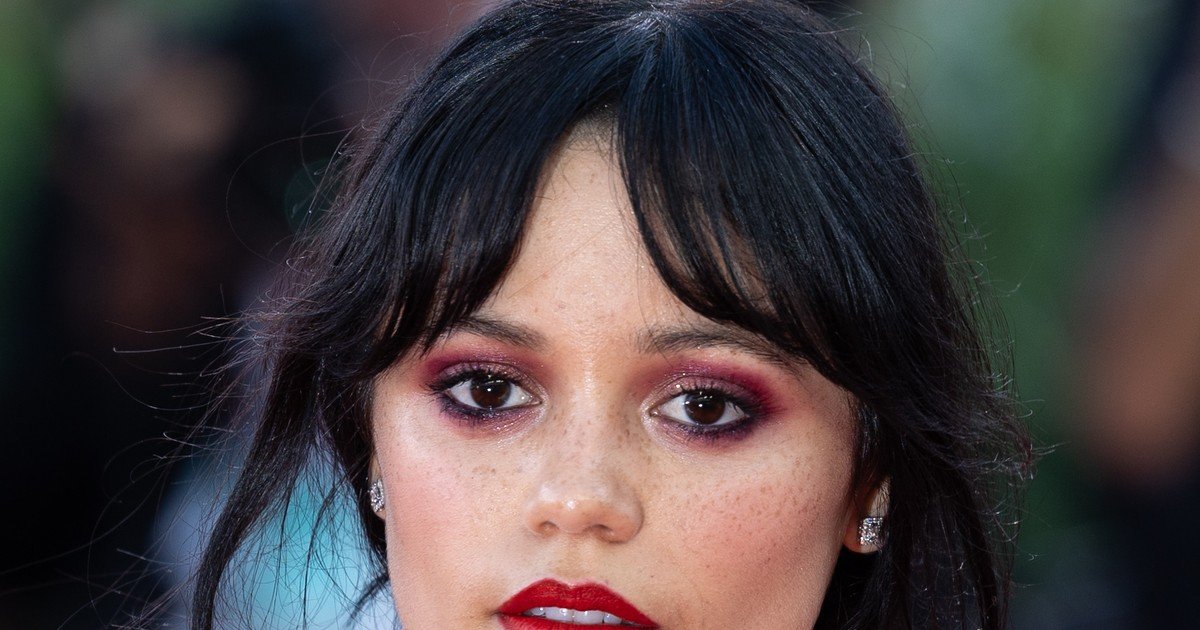
Some red-carpet moments are manufactured by publicists. This one was manufactured by physics. When Florence Pugh’s Rodarte gown met Jenna Ortega’s face at the Klara and the Sun premiere in London on October 15, the collision produced the defining fashion moment of the BFI London Film Festival: a hug, an impact, a gasped apology and a smile, all inside two seconds of footage that MTV UK shared and the internet immediately adopted.
To understand the accident, start with the garment. Pugh’s pastel blue Rodarte Spring/Summer 2026 gown was haute couture thinking at full volume: embroidered flowers across the bodice and skirt, and sleeves built outward into sculptural, wing-like shapes that held their architecture even as she moved. Dresses like this are engineered as much as sewn. Internal structure keeps the silhouette aloft, and the wearer becomes the pilot of a small, beautiful building that happens to have her arms inside it.
Sculptural Sleeves Versus the Laws of Crowds
The sculptural sleeves were the stars and the suspects. On the carpet’s open step-and-repeat, they framed Pugh like a Renaissance angel photographed by a fashion magazine. In the compressed scrum where actors greet each other, they functioned more like the outriggers of a boat. When Pugh opened her arms to embrace Ortega, the right sleeve completed the journey her hand intended — and arrived, with interest, at Ortega’s mouth. “Oh my god. I just bumped you in the face, I’m so sorry!” she said, catching Ortega’s head gently to check the damage.
 (https://flickr.com/photos/drlovell/ / Wikimedia Commons (CC BY-SA 2.0))
Ortega’s own look could not have made a better foil. Her custom dress was a gold slip by Torlowei, all micro straps, black lace edging and delicate floral embroidery at the bust and skirt, topped with a matching gold head scarf. It was a study in controlled minimalism: nothing protruded, nothing billowed, nothing could injure a colleague. The evening thus staged an accidental experiment in styling philosophies — the gown as architecture versus the gown as second skin — and for one brief, unforgettable second, architecture won by a clear and entirely accidental knockout.
The Glam That Balanced the Drama
What kept Pugh’s look from tipping into costume was the restraint everywhere else. Her long blonde hair was worn in a relaxed half-up, half-down style, and her glam was deliberately soft: luminous skin, gentle definition, an overall effect of natural makeup against the gown’s extravagance. It is a classic stylist’s equation — when the dress shouts, the beauty whispers — and it meant that in the close-up frames of the apology, viewers saw a person first and a spectacle second. The mishap read as human because the styling had already made her approachable.
 (Harald Krichel / Wikimedia Commons (CC BY-SA 4.0))
There is a practical craft to wearing volume that stylists discuss and civilians rarely consider: turning radius. A structured sleeve adds perhaps forty centimetres to each side of the body, which must be recalibrated for doorways, car doors, photographers’ lenses and, critically, other people’s faces. Pugh managed the dress gracefully for an entire evening of posing, including a four-person group photograph with Amy Adams, Ortega and Rachel Forman. The single failure came at the most human moment of the night — the unplanned, arms-wide greeting between friends.
Seasoned carpet-watchers will note that Pugh is no stranger to headline dresses; her relationship with fashion has always favoured risk over safety, from sheer fabrics debated on morning television to silhouettes that trend before she reaches the theatre door. That history is precisely why the moment charmed rather than damaged her. Audiences have watched her treat enormous gowns as playgrounds for years, spinning, posing and laughing in them, so a collision felt like the logical extreme of a persona they already loved — the dress simply, finally, joined in the performance.
Why Designers Keep Building Bigger Dresses
Fashion could solve this problem tomorrow by returning to narrow silhouettes, and it will not, because volume is the point. In an era when a premiere produces ten thousand near-identical photographs, a sculptural gown guarantees the one image everyone remembers. Pugh’s dress was already the night’s most discussed garment before it made contact; afterwards, it became a story with a plot. Designers chase memorability, actresses chase individuality, and both accept the occasional collateral hug as the cost of doing business at the highest level of the carpet.
There is also the matter of the photograph that never happened cleanly. The group image of the evening — Pugh, Adams, Ortega and Forman together — required a small diplomatic summit of its own, as stylists arranged the Rodarte sleeves so they framed rather than swallowed the woman beside their wearer. Assistants hovered at the edges like air-traffic controllers, adjusting volume between flashes. That the final photographs look serene is a tribute to invisible labour: couture at this scale is a team sport long before it becomes a headline.
 (CaseyJNewell / Wikimedia Commons (CC BY-SA 4.0))
The final verdict of the footage is affectionate on all sides. Pugh apologised like a friend, Ortega absorbed the blow like a professional, and the dress — unrepentant, magnificent — sailed on through the evening collecting photographs. If the clip taught the internet anything, it is that the distance between a fashion triumph and a fashion incident is exactly one enthusiastic hug, and that the best-dressed person in any accident is the one who checks first whether everyone else is okay — and on this carpet, by that measure, both women were dressed perfectly, whatever the tape-measure said about the sleeves.