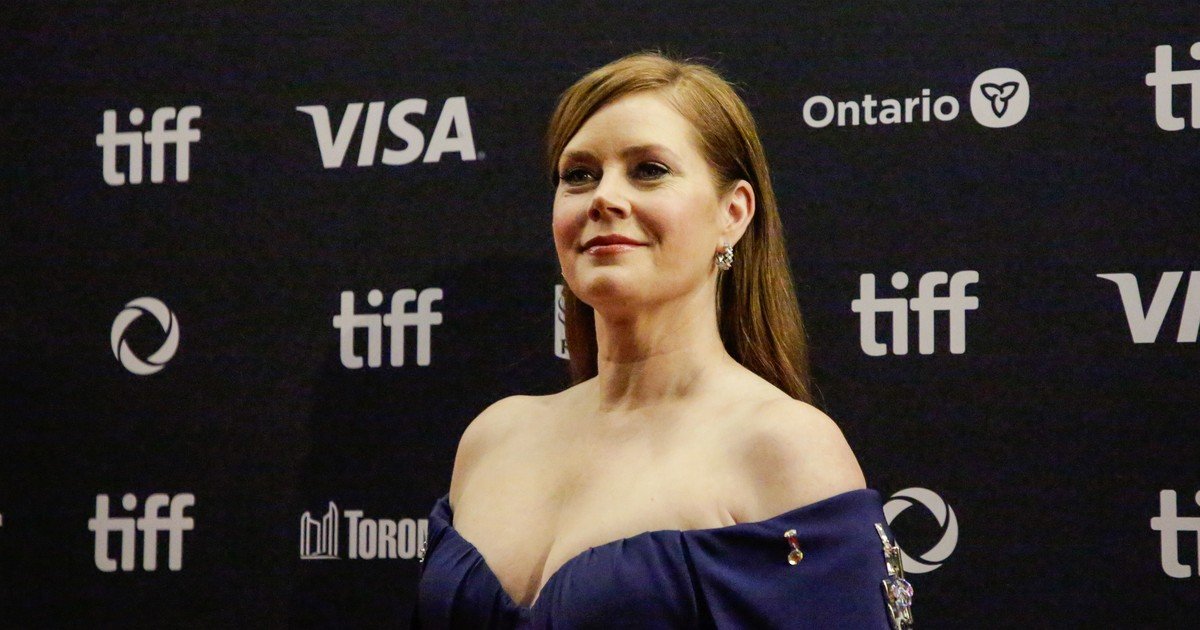
Strip away the viral hug, and the Klara and the Sun premiere was a launchpad for one of the autumn’s most intriguing films: a book adaptation of Kazuo Ishiguro’s bestselling 2021 novel, directed by Taika Waititi and led by Jenna Ortega as an artificial girl learning what love means. The film arrives in theaters on October 23, and everything about its source material suggests a very different kind of robot story — quiet, sunlit and quietly devastating.
Ishiguro, the Nobel Prize-winning author of Never Let Me Go and The Remains of the Day, specialises in narrators who understand their world imperfectly and reveal its cruelty by accident. Klara is his most innocent guide yet: a solar-powered Artificial Friend, or AF, a humanoid companion designed to combat loneliness in children, who waits in a store window with her fellow machines, watching the street and praying to the sun that gives her energy. “Glorious sun,” she says in the trailer. “Please let today be my day. Let me find a friend.”
A Dystopian Story Told at Whisper Volume
Klara and the Sun belongs to dystopian fiction, but of a distinctly Ishiguro kind: no rebellions, no explosions, just a future that has quietly arranged itself around genetic advantage, replaced workers and children educated alone at home. The horror seeps in through tenderness. Klara is bought by Chrissie, played by Amy Adams, for her ill teenage daughter Josie, and the machine’s devotion to the girl becomes the lens through which the audience measures every human failure around her. It is science fiction as emotional X-ray rather than spectacle.
 (David Shankbone / Wikimedia Commons (CC BY 3.0))
The casting mixes generations and tones in classic Waititi fashion. Ortega carries the film opposite Adams, with Mia Tharia as Josie and Aran Murphy — son of Oscar winner Cillian Murphy — in a key role. Steve Buscemi and Natasha Lyonne round out the ensemble, with Lyonne playing the store manager who tells the waiting AFs, “I know artificial friends aren’t as popular as they used to be. But I still firmly believe that all of you older AFs have a fighting chance at finding homes.” It is a joke with a bruise inside it, which is the film in miniature.
Ortega’s Klara and the Craft of Being Artificial
Ortega has spoken about building Klara’s physicality from the toddlers in her own family — nieces and nephews whose clumsiness and curiosity she borrowed, reversing a friend’s “glass hands” habit into a signature gesture of index fingers raised. Waititi has called her a “brilliant clown” whose performance stays grounded and emotional, and the combination matters: Klara must be mechanical enough to be other, and warm enough that an audience’s heart breaks on schedule. A novel adaptation lives or dies on exactly this translation, from interior narration to a face the camera can read.
 (Gage Skidmore / Wikimedia Commons (CC BY-SA 3.0))
The solar powered detail is more than world-building. Klara’s faith in the sun — she treats it as a benevolent god who nourishes her and might be bargained with — gives the film its spiritual engine and its title. Ishiguro has said he wanted to write about love from the perspective of a being who learns it by observation, and the adaptation keeps that structure: a machine studying humans the way humans study the weather, hoping the patterns mean she is loved back.
Early viewers at the festival described a film that trusts stillness: long looks out of windows, a machine’s-eye patience, and dialogue that circles the unsayable the way Ishiguro’s prose does. That restraint is a gamble in a market addicted to noise, but it is also the source of the book’s power, and the premiere audience — the same crowd that had laughed at a dress collision an hour earlier — reportedly left the screening in the hushed mood that follows a story which has quietly rearranged something inside them.
From Festival Premiere to Theatrical Moment
The road from page to screen has been long: the novel was a lockdown-era phenomenon in 2021, and the film’s June trailer introduced Ortega’s still, watchful Klara to a generation that knows her as Wednesday Addams. The BFI premiere, dress incident and all, completed the handover from literary event to pop-cultural one. A wide theatrical release on October 23 will now test whether quiet science fiction can still command a cinema audience — with a story arguing, gently, that the most human character in the room may not be human at all.
For Ortega, the role also marks a deliberate expansion beyond the gothic persona that made her famous. Klara’s wonder is the opposite of Wednesday Addams’ deadpan: open, earnest and undefended. Playing a character who experiences every feeling for the first time, in public, may prove the boldest gamble of her career so far.
 (Martin Kraft / Wikimedia Commons (CC BY-SA 4.0))
That is the bet Waititi and his cast have made: that audiences who arrive for a star, a dress or a viral clip will stay for a machine learning to pray. If the film works, Klara and the Sun will join Never Let Me Go among the definitive Ishiguro adaptations — proof that the softest stories can carry the heaviest questions, and that sometimes the future of cinema looks less like a robot uprising and more like a girl in a shop window, watching the light, waiting to be chosen — and trusting, as Klara does, that being overlooked for a while is not the same as being unloved, and that the right person eventually stops at the window.