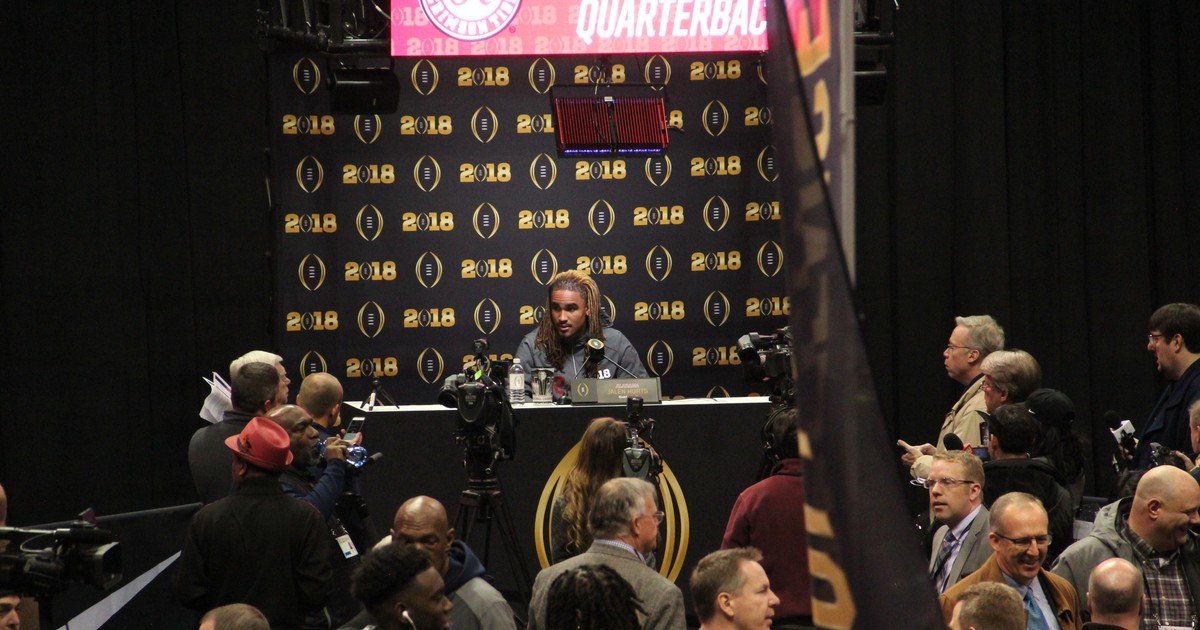
Every sports-media era gets the scandal that teaches its lesson most clearly, and the Jalen Hurts episode has the makings of one. A respected former player, working as an analyst, floated a theory about a quarterback’s motives for being hurt. Within days, the quarterback’s season ended with blood clots in both lungs. The analyst apologized, fully and by name. What remains is a case study in Speculation — where it belongs in sports talk, and where it must stop.
Michael Robinson’s original remarks were not a report. He said, more than once, that he did not know anything. The theory — that the Eagles might be pinning their season on Hurts, and that Hurts’ camp might be content to be “hurt, too” — was offered as vibe, not evidence. That is precisely why it failed the basic test of Media Ethics: the more serious the subject, the stronger the sourcing needs to be, and few subjects are more serious than another person’s body.
 (All-Pro Reels / Wikimedia Commons (CC BY-SA 2.0))
The Apology, Done Properly
Credit where it is due: Robinson’s correction was a model of the form. His On-Air Apology and his written statement named Hurts, his family, the Eagles organization and the fan base. He called his own comments unfounded. He identified the two errors precisely — speculating on a health issue, and questioning a player’s commitment — and he did it the same day the true diagnosis became public, when walking the comments back cost him the most.
As a Retired Player, Robinson speaks with an authority that pure media personalities cannot claim. He played the game as a Running Back and fullback, absorbed its hits and knows what it costs to be doubted in a locker room. That background is exactly why his words carried extra weight when they were wrong — audiences reasonably assume a former player’s instincts about a player’s toughness are informed, even when he says they are guesses.
 (All-Pro Reels / Wikimedia Commons (CC BY-SA 2.0))
Why Health Is Different
Sports debate survives on argued opinions: play calls, contracts, effort, legacy. Health sits outside that economy. A quarterback’s clot is not a take; it is a diagnosis that unfolds in hospitals, on monitoring schedules, in decisions about whether a man can safely sit on an airplane. When Hurts — a Franchise Quarterback whose value to his team is measured in hundreds of millions — was doubted while playing through the early stages of that diagnosis, the commentary did not just miss. It inverted reality.
Consider what the record now shows about the London Game alone. Hurts was identified with a blood clot before kickoff against Jacksonville, played the game, and then took the eight-hour Team Travel flight home before doctors found the clots had reached his lungs. However the medical process is ultimately judged, the player’s own conduct in that window was the opposite of the theory floated about him. His Player Commitment was documented in a hospital, not a headline.
 (All-Pro Reels from District of Columbia, USA / Wikimedia Commons (CC BY-SA 2.0))
What Changes Now
The practical lesson for Sports Journalism is simple enough to fit on an index card in every studio: you may question a throw, a scheme or a contract, but you do not improvise about a diagnosis. If a player’s camp, team or agent has not said it, an analyst’s imagination is not a source. Robinson’s apology said as much in fewer words, and the speed and completeness of it may end up helping the next analyst resist the same temptation.
A Standard Worth Keeping
It would be comforting to treat this as a one-off failure by one analyst on one Thursday, but the incentives that produced it are structural. Studio debate rewards the theory nobody else has said yet, delivered with enough confidence to survive a commercial break. Health speculation is seductive within that economy precisely because it feels like insight: the commentator appears to know the hidden story behind the visible one. The Hurts case strips that appeal bare, showing what the hidden story actually was — a hospital night, a long flight, and clots moving toward a man’s lungs.
Former players occupy a particular place in that economy. Their instincts are treated as reporting by audiences who watched them play, and their doubts about a current player’s toughness can follow that player into contract talks and public memory. Robinson understood that machinery well enough to name his error exactly: he speculated on a health issue and on a commitment he had no standing to judge. His apology matters partly because it came from inside the guild, a peer correcting the record in terms other analysts cannot dismiss as outsiders misunderstanding the job.
The constructive version of the lesson is not that analysts should say less about everything. Scrutiny of play-calling, roster construction, effort on film and front-office honesty is the legitimate substance of the job, and Hurts himself has faced plenty of it fairly throughout his career. The line runs between what film and reporting can support and what only a medical chart can. Crossing it did not produce a bold segment; it produced a sincere apology, a damaged week for a sick player’s family, and a reminder taped, one hopes, to studio walls across the league.
Hurts will return when his doctors say so, to a fan base that watched his commitment questioned in the same week his lungs were filling with clots. If the episode has a fitting end, it is that the next time an analyst reaches for a theory about a player’s body, Robinson’s sentence is the one that comes to mind first: they were unfounded, and I never should have speculated. That is not censorship. It is the profession’s own standard, finally stated by the man who broke it.
For Hurts, the road ahead is medical, not rhetorical: blood thinners, monitoring, no contact, and an expected full recovery that everyone in Philadelphia will happily wait for. For the rest of the football media world, the episode leaves a durable standard. The apology was sincere, and it was necessary — because by the time the facts arrived, they showed a quarterback who had given his team everything except the one thing speculation accused him of withholding: his commitment.