It took less than a day for the ballroom’s biggest backstage story in years to split the Dancing with the Stars fandom right down the middle. On one side: viewers who say Val Chmerkovskiy‘s punishment fits the offense and applaud the show for protecting its people. On the other: loyalists who argue a deleted post and a swift apology should have been the end of it. What almost nobody disputes is that the series just crossed a line it had never crossed before — and everyone is watching what happens next.
The news broke on Saturday, October 17, when Chmerkovskiy himself told fans he would miss the upcoming Dedication Night episode. Within hours, social media lit up with reactions ranging from heartbroken to furious to grimly satisfied. Longtime viewers described the moment as surreal: the dancer, a two-time mirrorball champion and one of the franchise’s most familiar faces, benched by his own show for something he typed on his phone.
Much of the fiercest debate has centered on intent versus impact. Supporters of the dancer point to his own explanation — that he was reacting in the heat of the moment as a husband, reaching for a meme to deflect attention from his wife, fellow pro Jenna Johnson, after judge Carrie Ann Inaba‘s critique of her latest routine with celebrity partner Harry Shum Jr. In their telling, the since-deleted “Fresh Prince” post was a clumsy joke, not a threat, and the dancer’s rapid, repeated apologies should count for something.

Critics of that view answer that impact is exactly the point. The image Chmerkovskiy shared — a photograph of Will Smith striking Chris Rock at the 94th Academy Awards — carries a weight that no caption can fully defuse, they argue, and posting it in the direction of a colleague crossed a line no apology can uncross. For this camp, BBC Studios‘ response was not an overreaction but a long-overdue statement that the ballroom is a workplace first and a television set second.
The production company’s statement left little room for interpretation. Calling the well-being of everyone working on the show “non-negotiable” and labeling the post inappropriate, BBC Studios made clear that Chmerkovskiy would sit out the coming week — a decision that instantly became the first professional suspension in the program’s two-decade history. Industry watchers noted the careful wording: firm enough to reassure cast and crew, measured enough to leave the door open for the dancer’s eventual return.
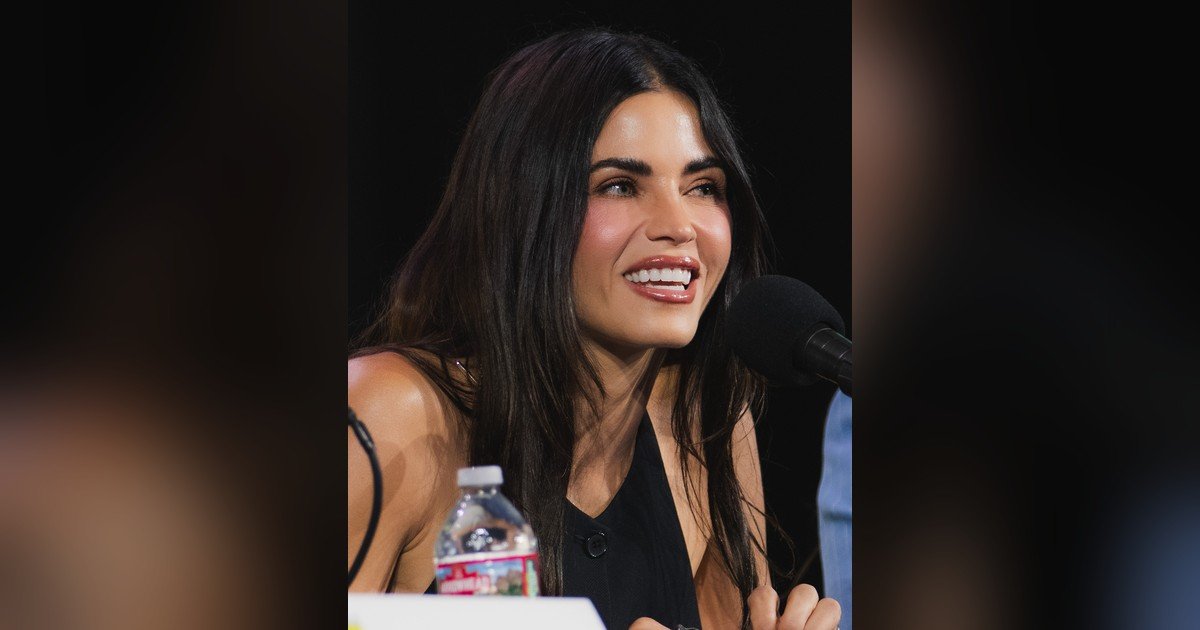
That door matters enormously to fans, because the practical questions are piling up fast. Chief among them: what becomes of Dedication Night for Chmerkovskiy’s celebrity partner, Jenna Dewan? The actress has been pouring herself into rehearsals this season, and the themed episode — where stars dedicate routines to the people who shaped their lives — demands emotional vulnerability as much as technique. Doing it without the pro who has guided her every step is a tall order, and the show has yet to explain how her performance will be staged in his absence. Viewers who have followed Dewan’s journey this season say they feel for her most of all: through no fault of her own, her Dedication Night has been swallowed by someone else’s controversy.
Then there is the question of precedent. For twenty years, Dancing with the Stars has cultivated an image as reality television’s warmest room — a place of glitter, comebacks, and tearful embraces. Backstage friction has occasionally bubbled into public view, but the production had never before suspended a professional dancer, a fact that gives this moment its historic sting. Television commentators say the move puts every future pro on notice: the show’s standards now have teeth, and social media conduct counts as workplace conduct.

Some fans have also turned their attention to the human tangle at the story’s center. Inaba, 58, found herself unwillingly cast in the middle of a marital defense gone wrong; Chmerkovskiy himself acknowledged she “certainly didn’t deserve to get caught in the middle of my bad judgement.” Johnson, meanwhile, has said nothing publicly — a silence her supporters read as dignity and her critics read as complicity, though there is no evidence she had any hand in her husband’s post. The result is a knot of loyalties that no single statement seems able to untangle.
What happens after Dedication Night is the great unknown. Chmerkovskiy’s tone throughout the episode has been consistently contrite: he apologized to Inaba directly on October 15, issued a public apology reflecting on his platform and responsibilities, and closed his suspension announcement by promising to watch and cheer from home. None of that guarantees a smooth return, but it gives producers something to work with if they choose reconciliation over rupture. For a deeper look at how the dancer built the legacy now at stake, his road from breakout pro to two-time champion is worth revisiting.
Also read: Val Chmerkovskiy's DWTS Legacy: Two Mirrorballs, 15 Seasons – and Now an Unwanted First
Television history offers few perfect parallels, which is precisely why the story has traveled so far beyond the show’s usual audience. A beloved veteran, an unprecedented punishment, a viral apology tour, and a theme night built around heartfelt dedications — the ingredients have turned an ordinary competition week into a genuine cultural moment. Morning shows picked it up, entertainment columns weighed in, and even viewers who have never watched a single paso doble now know the name of the first pro ever suspended from the ballroom.

For ABC and Disney+, which air the series Tuesdays at 8 p.m. ET/PT, the calculation is delicate. The controversy has delivered the kind of attention money cannot buy, but it is attention of the most uncomfortable kind — the sort that forces a family-friendly brand to talk about workplace safety and social media threats. How the broadcast handles the empty chair on Dedication Night, from commentary to camera work, will say as much about the franchise’s values as any press statement.
One week from now, the ballroom will either welcome Chmerkovskiy back or begin a longer, harder conversation about his future. Until then, fans remain divided, the judges’ table carries on one chair heavier with subtext, and Jenna Dewan dances through the strangest week of her season. Whatever comes next, the story of how a fan favorite became a first-of-his-kind cautionary tale is far from over — and the whole industry is taking notes.
Also read: Val Chmerkovskiy's DWTS Legacy: Two Mirrorballs, 15 Seasons – and Now an Unwanted First
If there is a silver lining, it may be the conversation the suspension has forced into the open: about the pressures performers face online, the speed at which a single post can detonate a career, and the responsibility that comes with millions of followers. The ballroom has always promised transformation; this week, it is the show itself that is being transformed.