Every famous wedding produces two events: the day itself, and the long public negotiation over what the rest of us get to know about it. Zendaya and Tom Holland’s marriage has produced the most disciplined negotiation in celebrity memory — and at its centre stands one man, stylist Law Roach, performing a masterclass in how to say everything and reveal nothing.
The Architect and His Masterpiece
Roach calls himself an Image Architect, and the title is earned. As Zendaya’s Longtime Stylist — in place since she was fourteen — he has designed not just outfits but an entire visual biography: Disney ingenue to fashion revolutionary, told in red-carpet chapters. The partnership’s foundation, in his own phrase, is a Super Trust: each knows the other will never break the collaboration’s rules.
A wedding dress is, for an image architect, the ultimate commission — the single look by which decades of work might be summarised. Roach’s, by his own testimony, was a triumph: one of the most beautiful brides he has ever seen. And then the couple’s privacy rules did to his masterpiece what they have done to every detail of the day. They kept it.
 (Purplehighlighter24 / Wikimedia Commons (CC BY-SA 4.0))
A Timeline of Teases
The public record of this wedding reads like a Roach press strategy in miniature. May 2025: no Vogue Wedding Spread, no public pictures — expectations managed before the event had even been confirmed. March 2026, on the Actor Awards red carpet: the wedding ‘already happened’ and everyone ‘missed it’ — the confirmation nobody could follow up, delivered with a smile.
June 2026 brought the only statement that truly mattered, and significantly it came from the groom: Holland’s own Marriage Confirmation, delivered in a June Esquire Interview, after which ‘wife’ entered his everyday vocabulary. August produced the Surrey celebration and, in parallel, the AI episode — viral fake images of the wedding, swatted away by Roach’s insistence that the real dress was ‘better than AI’ and the fakes ‘not good enough.’ October’s podcast added the eulogy: the most beautiful bride, briefly mourned for her invisibility, then protected all over again.
The Fakes at the Gate
The AI-Generated Wedding Photos deserve a moment of attention, because they explain the stakes. When a real event this famous produces no images, the internet manufactures them. The fakes that circulated this summer were glossy, confident and entirely invented — a counterfeit wedding for a couple who withheld the real one. Roach’s dismissal mattered because it came from authority: the one man who has seen the actual dress, telling the world the copies fail by comparison.
It is a strange new category of fashion criticism — the authentic look reviewed, sight unseen, against its forgeries — and only a wedding run on these principles could have produced it.
 (PhilipRomano / Wikimedia Commons (CC BY-SA 4.0))
Where They Met
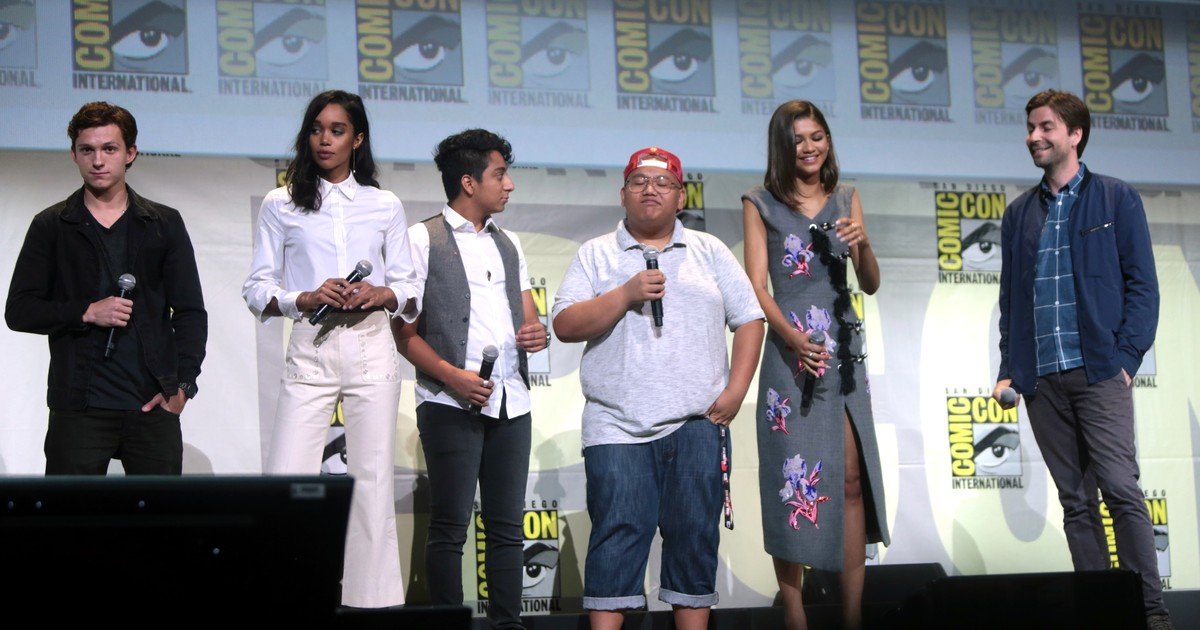
The romance underneath the secrecy began in the most public way imaginable: Spider-Man: Homecoming, the 2017 blockbuster that cast Holland as Peter Parker and Zendaya as MJ and put them on a press tour the whole world watched. Their relationship grew the same way their wedding would later be conducted — visible in outline, private in substance, confirmed only when they chose.
That long apprenticeship in managing curiosity is the context for everything since. This is a couple who learned, in their teens and twenties, exactly what public attention costs and what it buys. The wedding rules were not improvised; they were the mature form of a policy a decade in the making.
The Guard Who Jokes
Roach has joked that the more people ask him about the wedding, the more different answers he will give — a comedian’s way of posting a no-entry sign. It is the perfect summary of his role: the Red Carpet‘s most quotable man, deployed as the vault door of the one story everyone wants.
His October comments should be read in that light. ‘I wish she had been a little bit more public’ is not a crack in the wall; it is the wall, speaking fondly. The bride was beautiful. The dress was better than the fakes. The pictures are not coming. In an industry built on disclosure, Roach has turned withholding into the most eloquent statement of the year — and Zendaya’s wedding into the best-reviewed event nobody saw.
 (UKinUSA / Wikimedia Commons (CC BY-SA 2.0))
The Economics of the Unseen Dress
There is a commercial paradox buried in this story that the fashion industry is quietly studying. A conventional celebrity wedding dress is worth a fortune in coverage for exactly one news cycle; then it becomes a reference image, endlessly reused and slowly deflating. Zendaya’s dress, never shown, has appreciated for over a year on a single sentence of expert testimony. Designers have noticed. Agents have noticed. The unseen dress may be the most valuable garment of the decade precisely because its value was never spent.
Roach understands this arithmetic better than anyone — which is what makes his podcast wistfulness so interesting. The architect in him knows the work deserved an audience. The strategist in him knows the audience it never got is worth more. Both men spoke in that interview, in the same sentence, and then the loyal one won, as he always does.
What remains, when the timeline is laid out end to end, is admiration for the consistency of it. From the first pre-emptive refusal in 2025 to the podcast sigh of October 2026, every public word about this wedding has served the same policy, and the policy has never once been broken by the people it protects. In celebrity terms, that is not secrecy. That is craftsmanship.
It is, in the end, a very modern kind of fame management: not silence, which breeds invention, and not disclosure, which breeds appetite, but a third thing — theatre in place of information, charm in place of access, and a stylist who understands that the most powerful sentence in fashion is still ‘you should have seen it.’