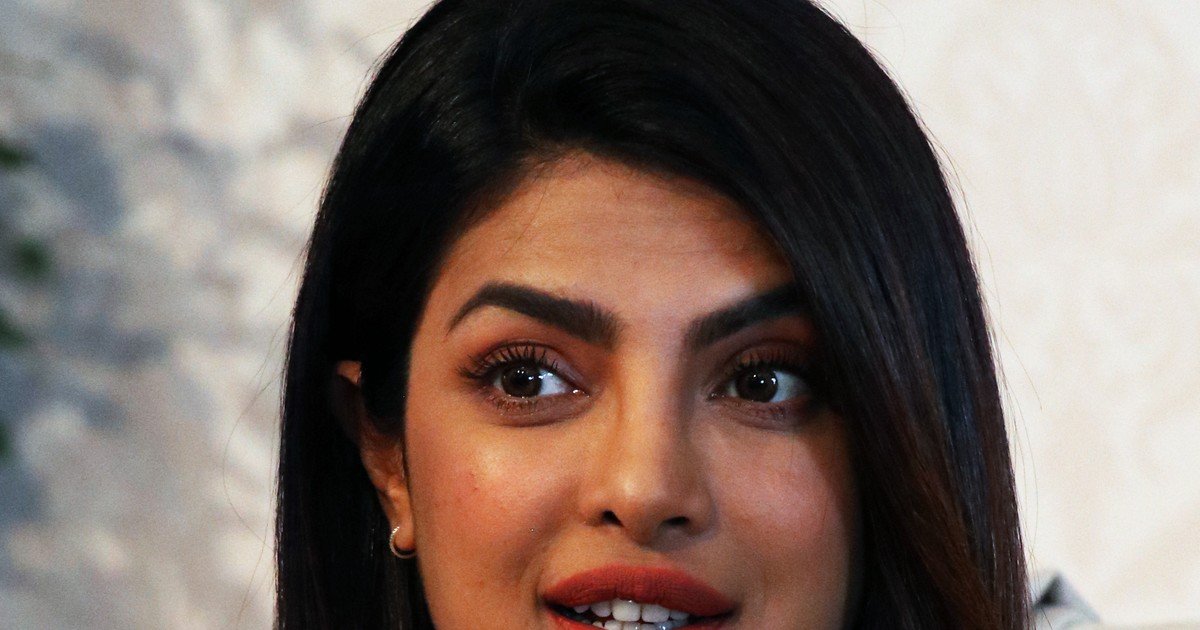
The third annual InStyle Imagemaker Awards did something awards shows rarely manage: it made its own argument, visually, from the stage. When Priyanka Chopra accepted the Woman of Impact Award in Los Angeles on October 15, she was handed the honor by Avantika Vandanapu, Amita Rao and Megan Suri — three rising South Asian performers whose presence beside her said more about her career than any montage could. This is the story of the night, the honoree, and the industry she rewired.
The Night InStyle Built
The Imagemaker Awards were created to celebrate the architects behind celebrity image — the stylists whose work the world photographs without knowing their names. The 2026 edition honored stylists Chris Horan and Law Roach, the latter a self-styled “image architect” whose red carpet constructions for clients including Zendaya have made him a celebrity outright. Around them, the room filled with the faces those images attach to: Heidi Klum, Megan Thee Stallion and Charli xcx led a guest list that spanned fashion, film and pop.
 (PhilipRomanoPhoto / Wikimedia Commons (CC BY-SA 4.0))
Against that backdrop, the Woman of Impact presentation played as the evening’s emotional peak. Suri told the room that for many Indian women, Chopra “is not the exception, but the entire example of not only how high we should dare to dream but also how much we can achieve.” Chopra answered with characteristic deflection, insisting her younger self “wouldn’t believe it” and crediting “my will to survive, my tenacity” as the trait that would surprise that shy, introverted girl the most.
The Road: Bareilly to Bollywood to the World
The scale of the claim is easier to credit with the biography in view. Chopra won Miss World 2000 at 18, became one of Bollywood‘s defining stars across the following decade, and then attempted the Hollywood crossover that had defeated generations of international stars before her. Quantico made her the first South Asian to headline an American network drama; film roles, production ventures and a memoir followed. At home, her marriage to Nick Jonas in 2018 — celebrated in ceremonies across India — made the couple a fixture of two entertainment cultures at once.
 (Digitas Photos / Wikimedia Commons (CC BY 2.0))
Advocacy ran in parallel the whole way: years as a UNICEF Goodwill Ambassador, field visits to refugee camps, sustained campaigning for girls’ education. The “impact” in Thursday’s award title was not decorative. It was the second résumé, the one built in Cox’s Bazar and a hundred classrooms, being read into the record alongside the filmography.
Numbers underline the arc. More than seventy films across languages. A television breakthrough watched in over a hundred countries. A social following measured in the tens of millions, which she has used as often for UNICEF field reports as for premieres. Chopra’s career is sometimes described as two careers — an Indian one and an American one — but the more accurate description is a single career conducted at global scale from very early on: the Miss World stage at 18 was already an international launchpad, and she has simply never worked at a smaller scale since. Thursday’s honor was the industry formally agreeing with the arithmetic.
Why the Presenters Mattered
Awards producers choose presenters the way editors choose headlines — to tell you what the story is. Giving Chopra’s trophy to Vandanapu, Rao and Suri converted a career honor into a generational tableau: the pioneer, applauded by the proof. Each of the three has spoken in the past about the scarcity of faces like theirs on American screens when they were children, and about the specific door Chopra’s Quantico moment opened. Thursday, they got to say it to her directly, in a room full of the industry that once could not imagine either generation.
 (Valerie Albert / Wikimedia Commons (CC BY-SA 4.0))
Reaction, In the Room and Beyond It
Coverage of the night moved quickly to Suri’s formulation, which traveled across social media within the hour — clipped, quoted and translated, gathering the particular momentum that attaches to a sentence people feel was said on their behalf. In India, entertainment press treated the honor as a hometown result; in Hollywood, trades framed it as the Imagemaker Awards arriving as a serious institution. Chopra’s own channels kept the tone she set on stage: gratitude aimed backward at the girl who started, rather than forward at the brand. For an industry fluent in self-congratulation, the evening’s register — hers especially — was strikingly uninterested in victory laps.
The Stylists’ Night, Too
It is worth keeping the night’s other honorees in frame, because the ceremony’s meaning depends on them. Horan and Roach represent a profession that spent a century anonymous and has, in the social media era, become authorship: fans now follow stylists, study their archives and credit them in captions as a matter of course. InStyle built an awards show on that shift, and the 2026 edition — with a guest list spanning Klum’s fashion generation, Megan’s pop present and Charli’s chaotic future — suggested the shift is permanent. Chopra, who has been dressed by the best of two continents for twenty-five years, closed the loop simply by standing among them as the night’s headline honoree: the canvas, honored alongside the painters, for what the painting made possible.
The Bigger Picture
Three editions in, the Imagemaker Awards have carved a distinct niche: the ceremony where fame examines its own reflection and honors the hands holding the mirror. Honoring Chopra — whose image has been constructed, reconstructed and exported across three decades and two industries — alongside Horan and Roach gave the 2026 edition a satisfying completeness. The image and the impact, the night suggested, were never separate stories. Priyanka Chopra’s career is simply the place where they most visibly became one — and where, if the presenters on that stage are any indication, the next decade of both stories will be written by women who grew up studying hers.