
Every child star story has a hinge — the moment the famous childhood ends and the rest of life begins. For Larry Mathews, Richie Petrie on The Dick Van Dyke Show, that hinge swung in 1966, when the Emmy-winning sitcom ended and a 10-year-old went back to school. What followed was not a comeback story or a cautionary tale. It was something rarer in Hollywood: a sixty-year working life, built largely behind the camera, by a man who had to start over more than once.
Mathews graduated from UCLA with a major in theater and tried to return to acting. The attempt ended in audition rooms packed with 30 to 45 actors and a blunt realization — “I basically started from scratch” — compounded by his admitted weakness for cold readings. “I just got very, very discouraged and very down,” he recalls. So he changed direction, deliberately and without bitterness, toward the side of the business that keeps shows alive after the applause.
 (Rogers & Cowan (publicity agency), Beverly Hills. / Wikimedia Commons (Public domain))
The Production Assistant Years
His bridge back was Ryan Jacobs, an associate producer who headed Danny Thomas Productions. Mathews asked him for an opportunity, and started at the bottom as a production assistant — running errands, reading scripts, doing the unglamorous everything of a working set. For a former child star, it was an education in humility and in craft: television, he learned, is made by hundreds of people whose names audiences never know.
From there he moved into post-production, the phase where filmed material becomes a finished episode. He joined the teams behind Soap and its spin-off Benson — the soap-parody hit and the beloved Benson — working first as a post-production coordinator and then rising to post-production manager. The boy who once performed in front of the cameras now managed the invisible pipeline behind them.
Odd Jobs, Film Labs and a Sales Career
The road was not smooth. After Soap was canceled and he could no longer remain in his position, Mathews took freelance assignments and odd jobs, including audiovisual work — the same scrappy patchwork he describes in his PEOPLE exclusive. Then an opportunity at Consolidated Film Industries changed his trajectory, opening a door into sales.
He spent the bulk of his professional life in post-production sales and management, working with film labs and video facilities — a sales career built on relationships and on knowing, from the inside, what production people actually need. Acting never fully left him: he occasionally took voiceover jobs for shows like Family Guy, small echoes of the performer he had been, folded into a technician’s and salesman’s life.
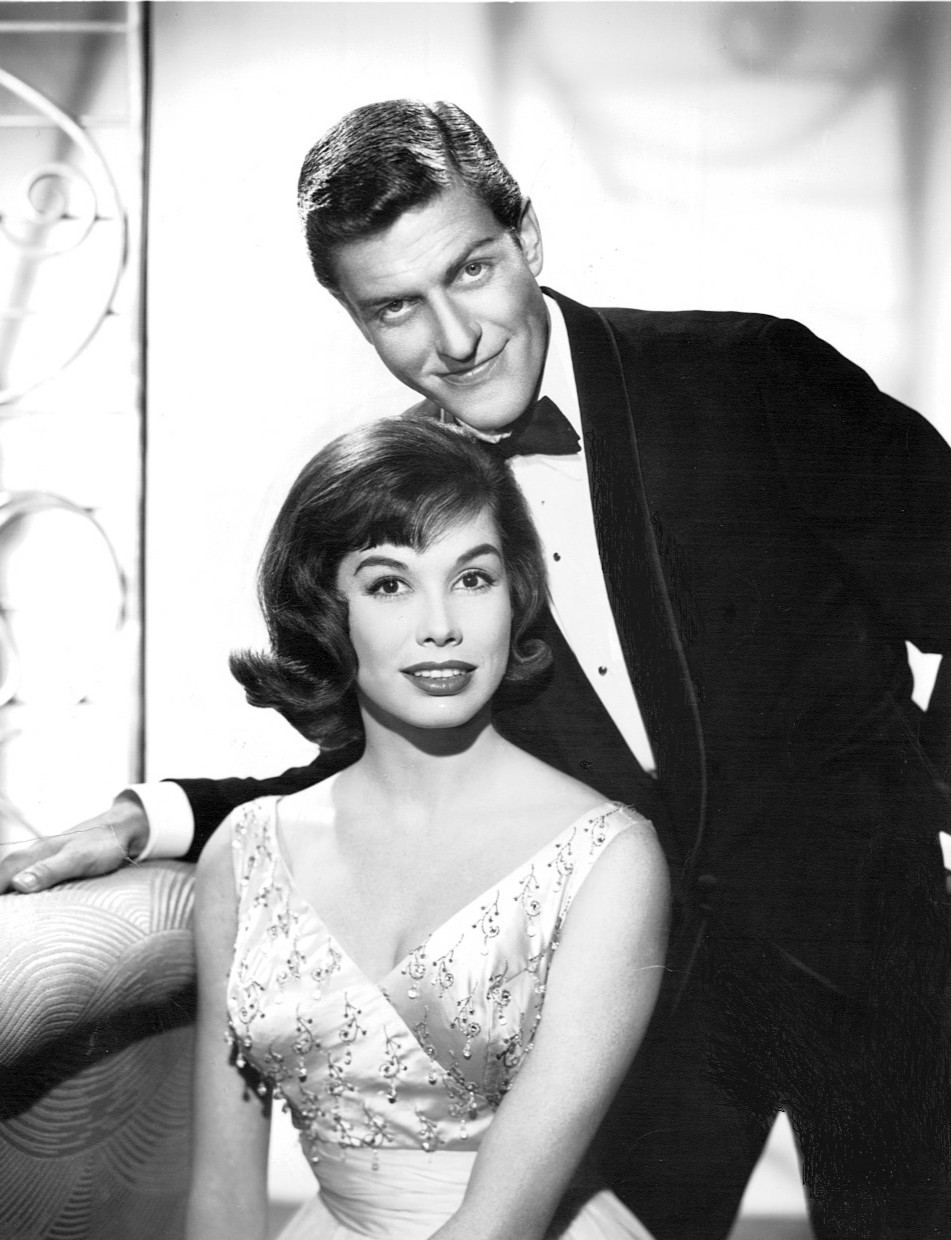 (CBS Television / Wikimedia Commons (Public domain))
“I’m Done” — Choosing Retirement
The final turn came with the pandemic. After four decades in the entertainment business — and, counting his childhood, some sixty years in it one way or another — COVID-19 brought Hollywood production to a standstill and made continuing increasingly difficult. Nearing 65, Mathews went home one night and told his wife, Jennifer: “I’m done. I’m done. 60 years I’ve been in this business one way or the other; I’ve been consistently in it, and I can’t do this anymore.”
It was not a collapse; it was a decision, delivered twice for emphasis — “I’m done. I’m done.” — by a man who had earned the right to make it. Retirement, for Mathews, is life with Jennifer as the couple approaches their 40th wedding anniversary.
 (Rogers & Cowan, public relations, Beverly Hills / Wikimedia Commons (Public domain))
There is a temptation to measure child stars by whether they stayed famous. Mathews’ life argues for a different measure: he stayed working. From a CBS soundstage at five years old, through discouraged auditions, production-assistant errands, post-production suites, film-lab sales and the occasional voiceover booth, he remained — in his own words — “consistently in it” for six decades. Richie Petrie grew up. He just did most of his growing where the audience couldn’t see, and built a life there that lasted.
A Different Kind of Longevity
Hollywood measures longevity in credits audiences can see. By that measure, Mathews’ career ended in 1966, when he was ten. By any honest measure, it ran for roughly sixty years — through production offices, post-production suites, film labs and sales calls, in an industry that discards most of the people who enter it, child stars fastest of all. The through-line of his story is not fame regained. It is employment sustained, craft accumulated, and a family built alongside all of it.
That is why his PEOPLE exclusive has struck a chord beyond nostalgia. The details are specific — audition rooms of 30 to 45 actors, the Emmy certificate that impressed no one, the errands and script-reading of a production assistant, the odd jobs between cancellations — but the arc is universal: a person whose first plan failed, who said so plainly, and who then spent decades doing the work in front of him until the work added up to a life. Richie Petrie was the beginning of that life. He was never, as it turns out, the whole of it — and Mathews, at 71, approaching forty years of marriage and finally, fully retired, seems entirely content with the proportions.
It is a legacy the television industry rarely celebrates, because it happened in edit bays, labs and offices rather than on a soundstage. But every episode audiences have ever loved passed through hands like Mathews’ — coordinators, managers, assistants — and his six decades among them deserve their place in the show’s long history.