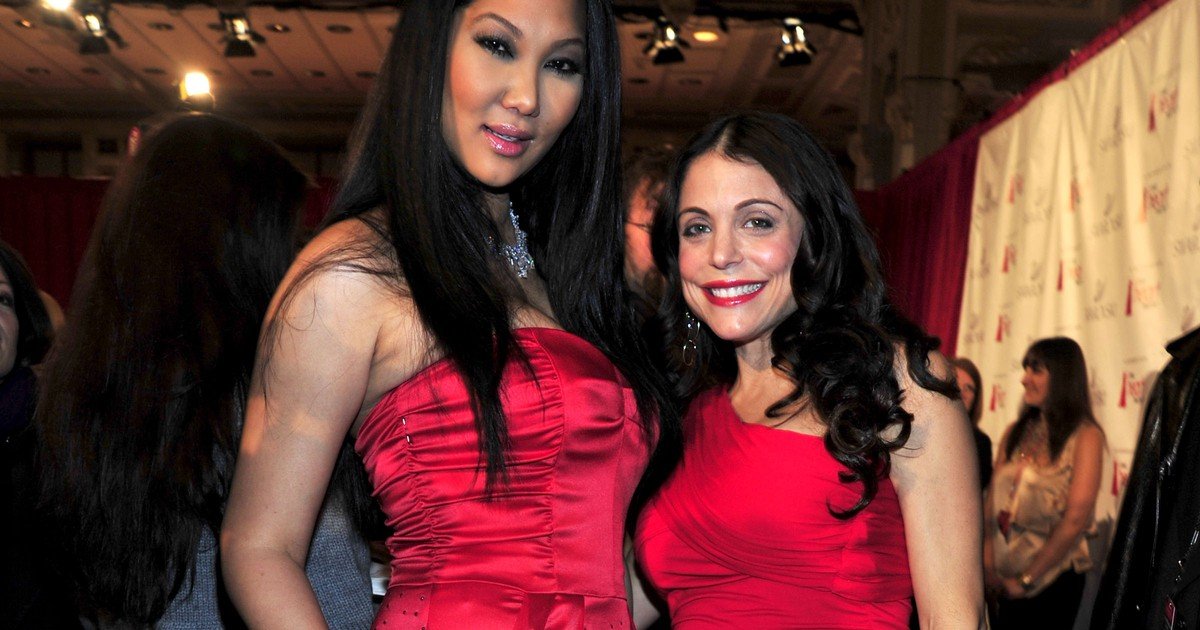
Bethenny Frankel has never been one to stay quiet when the internet starts arguing, and this week the former Real Housewives star turned her famous candor on one of fashion’s loudest debates. In an October 21 Instagram post, the 55-year-old SkinnyGirl entrepreneur came to the defense of the 2026 Victoria’s Secret Fashion Show, which has been taking heavy criticism online since it aired. Her message was characteristically blunt: people who claim to miss what the show used to be are misremembering it entirely.
The loudest complaints have centered on Kylie Jenner, who made her runway debut at the October 18 show wearing a $50 million diamond-encrusted Fantasy Bra — the first one the brand has shown since 2018. To a vocal slice of viewers, parading a jewel-covered bra reportedly worth tens of millions felt tone-deaf at a moment when many households are watching every dollar. Frankel acknowledged the criticism head-on, then brushed it aside with a businesswoman’s logic: “Money talks, Kylie Jenner walks, and they got to sell bras throughout the year.”
Money Talks, Kylie Jenner Walks
Frankel’s argument is that the show was never a charity gala; it is a marketing machine, and a spectacular one. The 2026 edition, staged in Los Angeles, leaned all the way into that identity. Alongside Jenner’s headline-making moment, the runway featured longtime Angels Barbara Palvin, Adriana Lima and Alessandra Ambrosio, while the music came from Tate McRae and Megan Thee Stallion, who performed for the packed front row. In Frankel’s telling, that is exactly what the brand has always sold: glamour at maximum volume.
 (Gina Hughes / Wikimedia Commons (CC BY 3.0))
The timing of Frankel’s post matters. The 2026 show was one of the brand’s biggest swings since its return to the runway, and the $50 million bra — designed with Jacob & Co. and centered on a 75.54-carat yellow diamond, according to reports — was engineered to dominate headlines. It did, just not entirely in the way the brand hoped. Comment threads filled with viewers calling the display excessive while grocery prices and rents climb, and that is the current Frankel stepped into: a culture-wide argument about whether luxury fantasy still has a place when the mood outside the arena is anxious.
Her answer, in essence, is that the fantasy is the product. Victoria’s Secret does not sell modesty; it sells aspiration, and aspiration has always been priced out of reach on purpose. When Frankel says the brand has “to sell bras throughout the year,” she is describing the oldest trick in fashion marketing — the halo effect, where one unforgettable runway image lifts an entire catalog of far more affordable pieces. Jenner, with her hundreds of millions of followers, delivers that halo more efficiently than any traditional casting choice could.
Frankel speaks from experience. She built the SkinnyGirl empire — from a low-calorie cocktail line into a lifestyle brand reportedly sold for a nine-figure sum — by understanding exactly how modern audiences buy: through personalities they trust, not institutions they admire. Her defense of the Victoria’s Secret strategy reads like a founder talking shop, translating runway controversy into the language of customer acquisition. Whether fashion purists like it or not, she is describing the industry as it actually operates.
It Was Never a Puritanical Event
The part of the online debate that clearly bothered Frankel most was the nostalgia. “Something else about this Victoria’s Secret discourse bothers me,” she said. “People saying, ‘I miss what it used to be,’ as if it’s some puritanical event that’s really drastically changed.” Her rebuttal: the show has always been a spectacle, full stop. The old productions featured “a musical entertainer like a Justin Timberlake” — who performed at the show in 2006 — plus “gorgeous women,” and nobody at the time pretended it was anything more refined than that.
 (Joey Pasion / Wikimedia Commons (CC BY-SA 3.0))
But Frankel did not romanticize the past either. She admitted the old shows had a darker backstage reality, describing an era when models survived on “girls drinking champagne and smoking cigarettes” and tried “to stay under 86 pounds to get down the runway.” That honesty is part of why her post landed: she defended the show without pretending its history was healthy.
We’ve Come a Long Way, Baby
Measured against that past, Frankel argued, the 2026 show is “a leap forward.” She pointed to its emphasis on inclusivity, calling the themes of the night — “inclusivity, exclusivity, being stunning, multicultural” — a genuine evolution. “We’ve come a long way, baby,” she said, borrowing the old Virginia Slims slogan to make the point that the brand’s idea of beauty has widened considerably since the champagne-and-cigarettes years.
 (The Heart Truth / Wikimedia Commons (Public Domain))
She also had a message for anyone upset that an influencer like Jenner — rather than a traditional runway veteran — got the night’s biggest moment. “Influencers are the new supermodels,” Frankel said, “so don’t hate the player, hate the game.” And she saved one last jab for the crowd itself, describing the audience as full of “finance bros in suits that are under 5’10”,” slightly balding — “because nobody loves a supermodel like a finance bro in a suit.” Love her or roll your eyes at her, Bethenny Frankel said the quiet part out loud, and the fashion world is still talking about it.
Whether the defense works is another question. The show’s producers are clearly betting that spectacle still sells, and Frankel — who built the SkinnyGirl empire by saying what other founders would not — is betting that honesty about the business sells too. The 2026 edition will be remembered either as the night the Fantasy Bra came roaring back or as the night the internet decided it had seen enough diamonds. Frankel has made her position clear: the runway was never a morality play, and judging it like one misses the point of the whole glittering exercise.