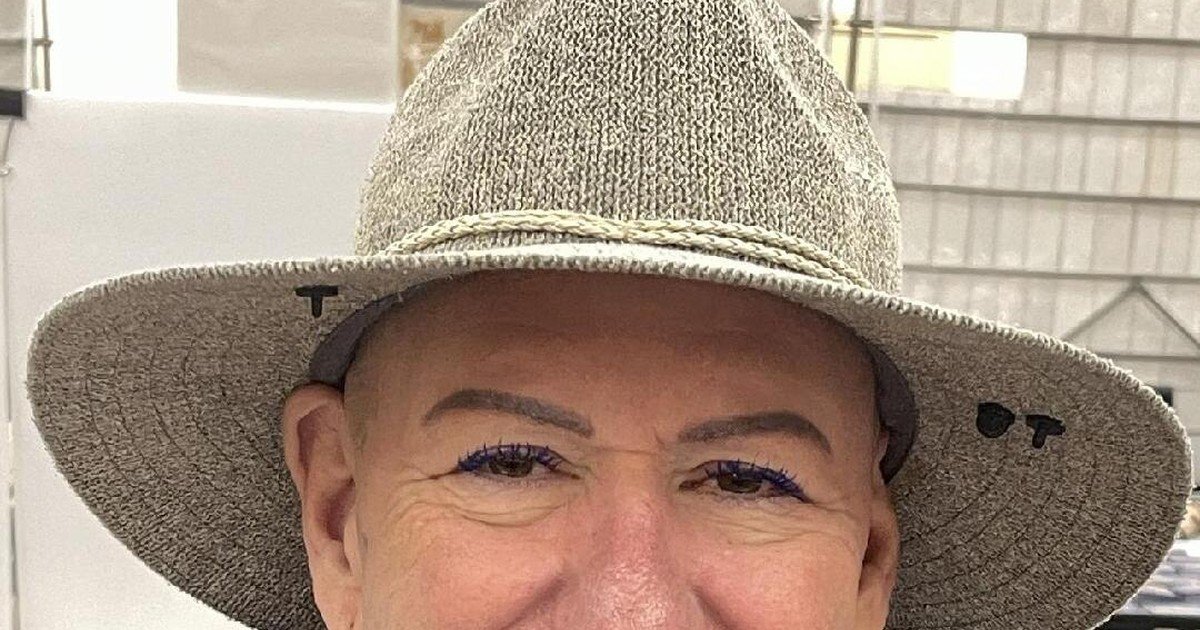
To a generation of television viewers, Larry Mathews will always be Richie Petrie, the little boy in the Petrie family’s living room on The Dick Van Dyke Show. But the child star‘s own story after the cameras stopped is a working man’s story — and in a new exclusive interview with PEOPLE, Mathews, 71, tells it plainly: after the hit sitcom ended, he had to work odd jobs and start, in his words, “from scratch.”
Mathews played Richie Petrie, son of Rob and Laura Petrie, on The Dick Van Dyke Show, the Emmy-winning classic that ended in 1966. He was 10 years old. “At a very young age, Larry Mathews became a familiar face to television audiences,” and then, almost overnight, the show that defined his childhood was over. He returned to school — ordinary classrooms instead of soundstages — and eventually graduated from UCLA with a theater major, hoping to return to acting as an adult.
 (CBS Television / Wikimedia Commons (Public domain))
“I Basically Started from Scratch”
The plan seemed sound. His previous agents agreed to represent him again; he had new photographs taken and assembled updated promotional materials before heading out on auditions. Fresh out of college, he believed his early experience would help him stand out. “In my mind, here I am going like, ‘Well, I was on an Emmy Award-winning show. I have an Emmy certificate… I’m gonna get this part. I’ll go on and it’ll be easy,'” he recalls thinking at the time.
It was not easy. Instead, Mathews walked into audition rooms filled with 30 to 45 other actors, all fighting for the same part. The credential that had defined his childhood barely registered. “I basically started from scratch,” he tells PEOPLE.
The Cold Reading Problem
Mathews is disarmingly honest about where he struggled. “I’ve never done good at cold readings, evidently, except when I was hired by Carl [Reiner],” he admits. A cold reading — performing a script sight unseen — was the industry’s front door, and it was a door that had never been part of his original casting. “But that was just Carl one-on-one with me… when Carl hired me, I wasn’t in a big room with a bunch of kids. I just went in. It was just me… and he told me how to do [it] and directed me through it, and I did it and it was easy.”
Without that individual attention, the mass auditions proved intimidating, and his television success did little to ease the pressure. “I just got very, very discouraged and very down and very… you know… I guess I just don’t have this or it’s not gonna happen,” he shares. It is a rare, unvarnished account of what happens to child performers when the industry asks them to re-earn, as adults, a place it once handed them as children.
 (CBS Television / Wikimedia Commons (Public domain))
A Second Career Behind the Camera
Rather than keep auditioning, Mathews pivoted. He approached Ryan Jacobs, an associate producer who headed Danny Thomas Productions at the time, and asked for an opportunity to return to the entertainment business — on the other side of it. He began as a production assistant, handling everything from running errands to reading scripts, before moving into other production roles.
He later joined the teams behind Soap and its spin-off Benson, working as a post-production coordinator before becoming post-production manager. After Soap was canceled, he took freelance assignments and odd jobs, including audiovisual work, until an opportunity at Consolidated Film Industries opened the door to a career in sales. He spent the bulk of his professional life in post-production sales and management, working with film labs and video facilities while occasionally taking voiceover jobs for shows like Family Guy.
 (Rogers & Cowan, public relations, Beverly Hills / Wikimedia Commons (Public domain))
Retirement, After 60 Years in the Business
The end, when it came, was Mathews’ own decision. After four decades in the entertainment business, the COVID-19 pandemic brought Hollywood production to a standstill. Nearing 65, he decided he had reached his limit. “I finally went home one night and said to my wife, ‘I’m done. I’m done. 60 years I’ve been in this business one way or the other; I’ve been consistently in it, and I can’t do this anymore,'” he tells PEOPLE.
Now retired, Mathews is enjoying life with his wife, Jennifer, as they approach their 40th wedding anniversary. Richie Petrie grew up, started from scratch more than once, and built a sixty-year working life in the business that first found him as a small boy. That is not a footnote to a famous sitcom. That is the whole story — and it is a good one.
The Honesty of the Telling
What gives Mathews’ account its force is the absence of varnish. He does not claim the industry wronged him, and he does not dress his discouragement up as wisdom. He walked into rooms of 30 to 45 actors expecting his Emmy certificate to speak for him, discovered it did not, struggled with cold readings, and felt the floor of his confidence give way — “very, very discouraged and very down.” Many former child stars never say that part out loud. Mathews says it in an exclusive interview at 71, retired and at peace, which is exactly why it lands: this is not a grievance, it is a record.
And the record continues past the hard part. The odd jobs were real, but so was everything after — the production-assistant years, the post-production suites at Soap and Benson, the film-lab sales career, the voiceover sessions. Starting from scratch, it turns out, was not something that happened to Mathews once. It was the skill his whole working life was built on.