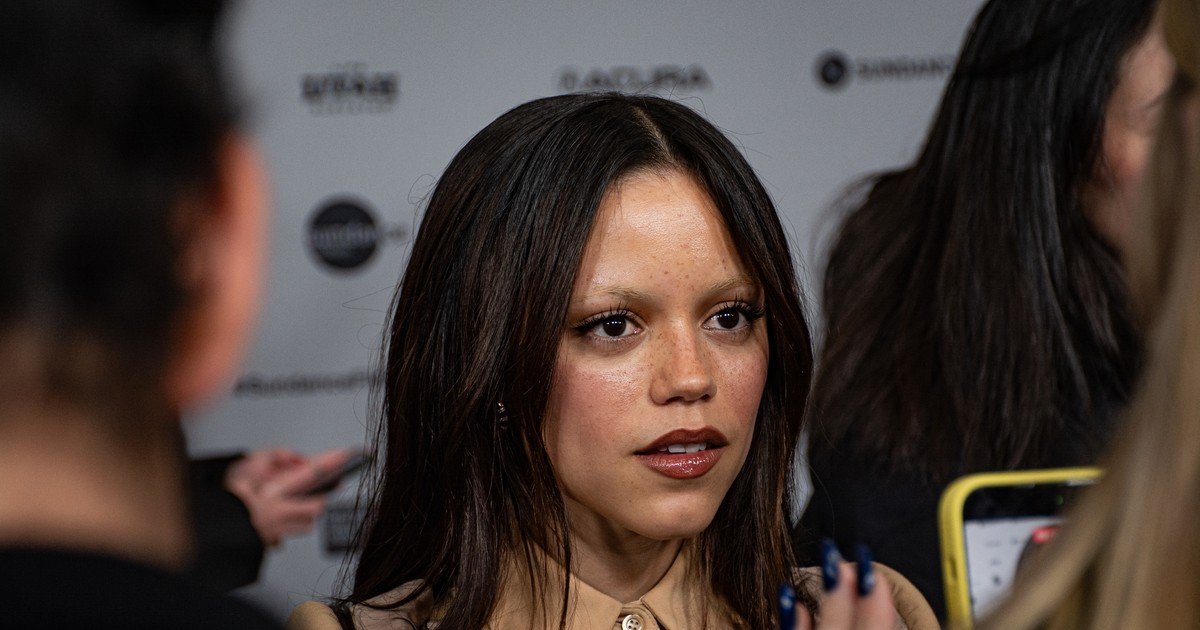
Jenna Ortega found the key to playing a robot in the most human place imaginable: her own family’s living room. The 24-year-old actress has revealed that the distinctive, toddler-like clumsiness of Klara — the solar-powered artificial intelligence companion she plays in Taika Waititi’s Klara and the Sun — was inspired by watching her young nieces and nephews discover the world, one wobbly, curious movement at a time.
The film, which arrives in theaters on Oct. 23, adapts Kazuo Ishiguro’s beloved 2021 novel and casts Ortega as an Artificial Friend: a humanoid companion bought by a mother, played by Amy Adams, for her seriously ill teenage daughter Josie, played by Mia Tharia. It is a gentle, heartbreaking story about love and observation — and it demanded a physical performance unlike anything in Ortega’s career so far.
“Taika Likened Klara to a Baby or a Toddler”
“Taika, very early on in the process, likened Klara to a baby or a toddler,” Ortega explained in a joint interview with the director. “The clumsiness was inspired by my nieces and nephews.” Anyone who has watched a toddler navigate a room will recognise the ingredients: the sudden stops, the tilting curiosity, the absolute concentration on ordinary objects, and limbs that have not yet agreed on a plan. Ortega studied those movements at family gatherings and rebuilt them as the body language of an android learning what it means to be alive.
 (Gabriel Brooks / Wikimedia Commons (CC BY 4.0))
“And then I just was kind of bored,” she continued, laughing. “I wanted to do something different because this is a very different character from anything I had played before.” After years of deadpan intensity as Wednesday Addams, the chance to play openness instead of armour clearly appealed to her. Klara’s wonder at sunlight, weather and human affection had to read as sincere without tipping into parody — a balancing act that began with those family observations.
A Robot the World Kept Passing By
In the film, Klara begins her story in the window of the Friend Store, where her habit of spontaneously standing like a flamingo, her outdated model type and her endearingly innocent optimism leave her overlooked by customer after customer. It takes Josie to spot what everyone else misses: something different and intriguing behind the odd posture and the eager smile. The science fiction premise is soft-spoken rather than explosive, built on small gestures — exactly the register Ortega’s toddler research served.
Because Klara runs on solar power, sunlight is both her fuel and her faith, and Ortega plays her reverence for the sun with the seriousness of a child explaining something adults have forgotten. The novel adaptation preserves Ishiguro’s first-person innocence, which makes the performance a sustained character study in seeing the human world fresh — grief, hope, jealousy and devotion all encountered for the first time, in the wrong order, at full intensity.
 (Colleen Sturtevant / Wikimedia Commons (CC BY 4.0))
The “Glass Hands” Trick
The nieces and nephews were not her only research subjects. “I have a friend who kind of walks with her pinkies up,” Ortega explained. “I call her glass hands… I had always wanted to do something like that so I just reversed it. I did index fingers up.” The detail sounds tiny, but on screen those small, deliberate oddities are how an audience believes a body is engineered rather than born.
“You had said something about sensors in Klara’s body,” she told Waititi, “so I just kind of used that as general E.T. fingers or something, and then it all went from there. It was just a collection of, pretty much, people that I knew.” It is an unusually homespun version of method acting — no extreme transformations, just a performer quietly harvesting the quirks of everyone she loves and assembling them into someone entirely new.
Learning to See Like Klara
Ishiguro’s novel is told entirely through Klara’s eyes, and her way of seeing is famously strange: faces arrive in fragments, rooms divide into boxes of light and shadow, and the sun is not a star but a person — a generous, nourishing presence she speaks to and bargains with. Translating that interior vision into a physical performance meant Ortega had to decide, scene by scene, what Klara notices first and what she misunderstands. The toddler research gave her the vocabulary: children, too, rank the world by brightness, movement and emotional temperature rather than logic, and they explain everything they cannot understand with total confidence.
It also shaped the character’s stillness. Between bursts of curiosity, Klara watches — and Ortega has spoken about how different that watching feels from the calculated stillness of Wednesday Addams. Wednesday’s silence is a weapon; Klara’s is a learning posture, head tilted toward whatever new thing the world is offering. Critics who have followed Ortega’s rapid rise — from child roles to horror franchises to the top of the streaming era — have been waiting for a performance that shows her range rather than her brand. On paper, at least, a solar-powered optimist built from observations of her own family is exactly that performance.
A Role Built on Loneliness and Love
At its heart, Klara and the Sun is a story about loneliness — the loneliness the Artificial Friends were built to cure, and the loneliness inside the family Klara joins, which is quietly fracturing under the weight of Josie’s mysterious illness. Adams, Natasha Lyonne, Steve Buscemi and Aran Murphy complete a cast that grounds the fable in recognisable family pain, while Josie and Klara’s bond gives the coming-of-age story its emotional engine.
 (Margaret Gardiner / Wikimedia Commons (CC BY 3.0))
Ahead of the film’s film premiere in theaters on Oct. 23, Waititi’s verdict on his star is already in: he calls her a “brilliant clown” whose performance stayed “grounded and emotional.” If the toddler research sounds like a cute anecdote, the finished performance reportedly proves it was something better — the foundation of the most tender role of Ortega’s career.