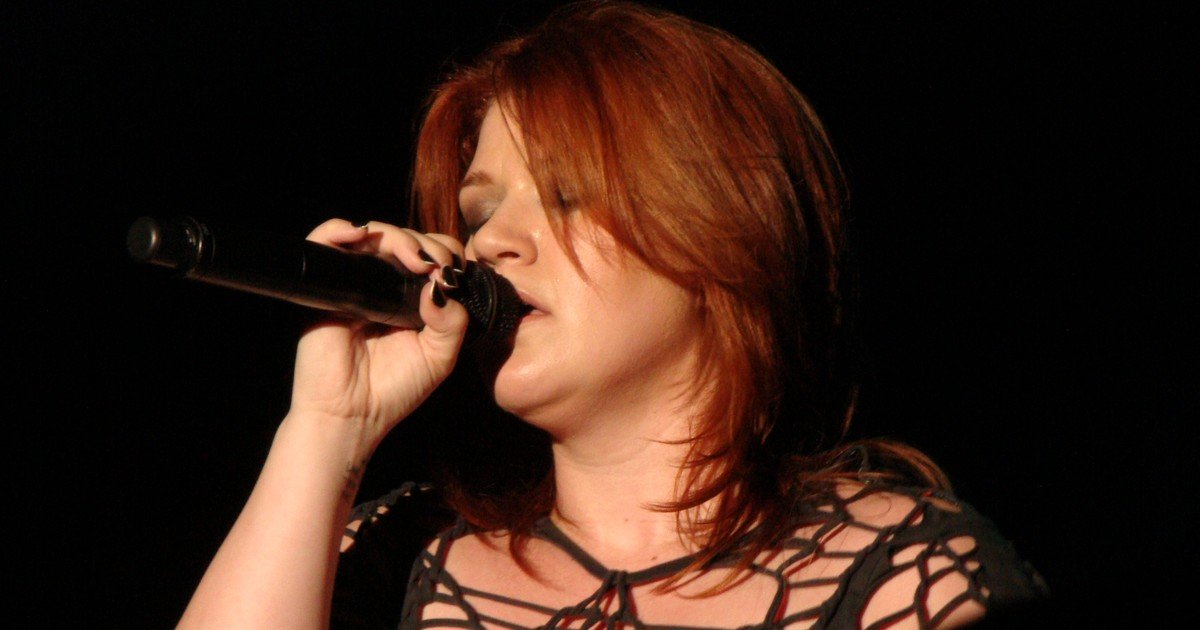
Kelly Clarkson went shopping for a singing bird and came home with a feud. The singer and talk show host has described, on air and online, a visit to Art of Play, a Brooklyn shop full of beautiful, whimsical objects, in which she asked about a mechanical bird called Molly the Automaton — and says she was treated so dismissively that she compared the experience to one of the most famous shopping scenes in movie history.
According to Clarkson’s account, the bird, a delicate singing automaton by artist Bliss Kolb, had a $15,000 price tag displayed on the wall. When she asked about it, she says, staff gave her what she called the Pretty Woman Treatment — a reference to the 1990 film in which Julia Roberts’ character is sneered out of a luxury boutique. Clarkson said she received condescending looks and was offered help finding “something comparable,” a phrase she clearly heard as a judgment about what she could afford.
 (vagueonthehow / Wikimedia Commons (CC BY 2.0))
What Clarkson Says Happened
Clarkson told the story the way she tells everything: as a funny, slightly wounded anecdote on The Kelly Clarkson Show and in posts to her enormous online audience. She described the staff’s Elevator Eyes — the slow up-and-down appraisal shoppers dread — and said the message she received was that the extraordinary object in front of her was not really for people like her. For a star whose entire brand is built on being the relatable Texan who never forgot where she came from, the implication landed hard.
An Automaton like Molly is not a toy. Singing-bird automatons are feats of miniature engineering, built to flutter, turn and trill through intricate clockwork, and contemporary examples by artists such as Kolb are scarce, labor-intensive and priced as collectible art. Clarkson, a known lover of beautiful and unusual objects, was not browsing idly; she was a serious customer asking a serious question about a serious piece.
The Store’s Version of the Same Visit
Art of Play, for its part, tells a markedly different story — and it is important to hear it in full. The shop says the Molly on display was not for sale. It says a nearly identical automaton was available in Seattle, that Kolb herself was willing to sell for $15,000, and that staff also offered to show Clarkson a $2,000 bird — an offer she, in the store’s telling, did not stick around long enough to see. On that account, what Clarkson heard as dismissal was staff explaining the unusual status of a display piece and trying to find her an alternative.
The store also described the emotional whiplash of the aftermath. It said it is surreal to become “the focus of such widespread outrage after just one mention by a celebrity,” and that it reached out to Clarkson directly “to clear the air,” adding that “we really do wish her the best.” It is a notably measured response from a small Brooklyn Boutique suddenly standing in the path of a superstar’s fan base.
 (vagueonthehow / Wikimedia Commons (CC BY 2.0))
“Liar”: The Feud Escalates Online
The exchange might have ended there, but Clarkson was not persuaded. In a sarcastic Instagram Stories post, she quoted the store’s version of the exchange back to it and called the shop a “liar,” signaling that she stood by every word of her account — the looks, the tone and the offer of something comparable. Her fans, predictably, took her side in overwhelming numbers, and the shop’s social channels filled with the kind of attention no small business asks for.
What makes the dispute so hard to settle from the outside is the Price Tag at its center. Clarkson says $15,000 was written on the wall, which she reasonably read as an invitation to buy. The store says the displayed bird was not for sale, whatever the tag implied. Both things can be partly true — a tag can denote an artist’s price for the work without meaning that specific display piece is available — but tone is harder to fact-check than signage, and tone is what this feud is really about.
A Bird That Became a Phenomenon
By any measure, Molly has become the most famous mechanical bird in America. The saga grew so large that it escaped entertainment news entirely: at New York’s Halloween Dog Parade, Chrissy Teigen and John Legend joked that they expected forty to fifty dogs to arrive dressed as Molly. A shopping anecdote does not achieve that kind of afterlife unless it touches something universal — and in this case, it touched the near-universal experience of being sized up in a store and found wanting.
 (Jana Beamer / Wikimedia Commons (CC BY 2.0))
Why This Story Struck a Nerve
Retail experts watching the saga unfold have noted how precisely it maps onto anxieties far beyond one shop. Being quietly assessed in a store — the glance at the shoes, the pause before the price is said aloud — is an experience shoppers across every income level recognize, and Clarkson’s fame inverted the usual script: here was a woman who could buy the bird many times over, describing the sting of being read as someone who could not. That inversion is what turned a celebrity anecdote into a conversation about dignity, class and the choreography of service, replayed on talk shows and timelines for days.
The shop’s defenders make a fair counterpoint of their own. Display pieces in art shops are often genuinely not for sale, artists do set their own terms, and a small staff cannot control how an explanation lands on a customer having a bad moment. Both readings of the same five minutes remain in circulation, which is exactly why the story refuses to die.
Where Things Stand
As of now, neither side has withdrawn its account. Clarkson has the bigger megaphone and the simpler story; the store has the more detailed one and the sympathy of anyone who has ever worked a retail floor. The shop says it has reached out privately to clear the air and wishes her well. Clarkson, publicly at least, is not buying it — which, given how this started, may be the most fitting summary of the entire affair. The bird, presumably, is still singing for whoever walks past, entirely unaware it started all of this.