There is a sentence in Lily Allen‘s new interview with The Times that lands like a door quietly closing on a difficult decade. Reflecting on the success of her album West End Girl and the tour that has carried it around the world, the singer said: “The album and tour having been a success has given me a sense of agency and accomplishment.” Then came the line that has been quoted everywhere since: “I don’t need to be taken care of any more. There’s definitely a sense of liberation in that.” It is a remarkable statement from an artist whose most acclaimed record in years was born from the collapse of her marriage — and whose reward for turning that collapse into art has been the biggest commercial run of her career in more than a decade.
The Numbers Behind the Comeback
The success is not a matter of interpretation; it is sitting in the charts. West End Girl, released in October 2025, climbed to No. 2 in the U.K. and reached No. 93 on the Billboard 200 in the United States — her first top-100 album there since Sheezus in 2014. For an artist whose commercial peak was widely assumed to be behind her, those numbers read like a correction. Allen has been famous since she was a teenager, and famous in pop is usually a one-way street: the conversation moves on, the audience ages, the hits become nostalgia. West End Girl refused that script. Fuelled by word of mouth and by songs listeners described as almost uncomfortably honest, it behaved like the work of a new artist with something to prove — which, in a sense, it was.
Back on the Biggest Stages
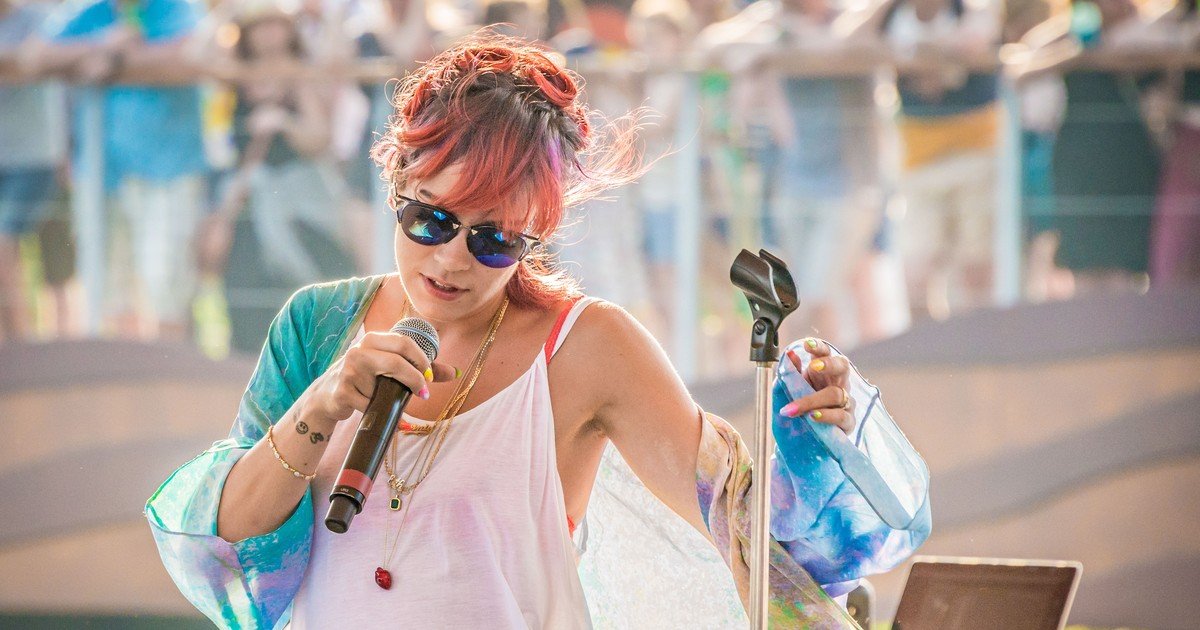
The live run has matched the record. Since the album’s release, Allen has performed on Saturday Night Live for the first time since 2007 — nearly two decades between appearances on American pop culture’s most famous stage — and headlined arenas across Europe, including a show at Madison Square Garden, the room every touring artist measures themselves against. The Arena Tour has just wrapped a string of North American dates, and its final leg, through Oceania, kicks off this week. Arena tours are expensive, unforgiving undertakings that promoters do not book on sentiment. They are booked because tickets sell. That Allen is completing a world run of them in 2026, twenty years after she first appeared, is the plainest possible evidence that the comeback is real.
 (Raph_PH / Wikimedia Commons (CC BY 2.0))
 (Justin Higuchi / Wikimedia Commons (CC BY 2.0))
The Album That Changed Everything
None of it happens without the record itself, and the record does not happen without the wreckage it describes. West End Girl centred on the end of a relationship — Allen’s marriage to actor David Harbour, from whom she split in 2025. Where another artist might have hidden behind metaphor, Allen wrote with a diarist’s specificity, and audiences responded to the lack of varnish. Breakup albums are an industry staple; what separated this one was the sense of a woman narrating her own story in real time, refusing both self-pity and revenge, and converting a private collapse into public momentum. The liberation she describes to The Times is not a mood. It is the direct product of that conversion: the worst year of her personal life became the foundation of her professional independence.
“Just Happy, in a Good Place”
Perhaps the most telling part of the interview is how un-dramatic its ending is. Asked about her life now — as a single mother raising two teenagers, Ethel, 14, and Marnie, 13, while fronting a world tour — Allen described herself as “just happy, in a good place,” adding that she is “living in the day, not planning too much.” It is the language of someone no longer performing recovery. The Oceania dates will close out the West End Girl era on stage, quite literally on the other side of the world from where the story began. What comes after that, she seems in no hurry to decide. For the first time in a long time, the plan belongs entirely to her — and by her own account, that is exactly the point.
 (Drew de F Fawkes / Wikimedia Commons (CC BY 2.0))
How the Album Spread
Ask how West End Girl travelled and the answer is unfashionable: people talked. In a market engineered around playlists and fifteen-second hooks, the album moved by recommendation — one listener pressing it on another with the fervour usually reserved for a secret. That kind of spread is slower than a viral spike and far more durable; every new listener arrived pre-sold by someone they trusted. It also explains the tour’s momentum months later. Albums discovered by word of mouth create audiences who feel ownership, and owners buy tickets, in arenas, on several continents. The industry’s machinery can manufacture a moment. It has never learned to manufacture that.
The Business of Being Back
It is worth stating plainly what the tour represents in business terms, because Allen’s quote about not needing to be taken care of is, among other things, a financial statement. Arena tours of this scale are underwritten on confidence: promoters stake millions on the bet that an artist can fill the biggest rooms night after night. That they placed the bet on Allen in 2025 and 2026 — and that the rooms filled — converts her revival from a story about feelings into one about leverage. An artist with a hit album is employable. An artist who can headline Madison Square Garden is in charge.
Living in the Day
The interview’s most revealing phrase may be its quietest: “living in the day, not planning too much.” Comebacks are usually narrated as campaigns — strategies, rollouts, five-year plans. Allen describes hers as something closer to weather: arrived, enjoyed, not over-managed. Coming from a performer whose early career was a masterclass in control of her own image, the looseness sounds like the actual liberation she is describing. The Oceania shows will end the tour; whatever she does next will be decided by a woman who no longer has to decide quickly, or for anyone else. That, more than any chart position, is what taken care of no longer means.