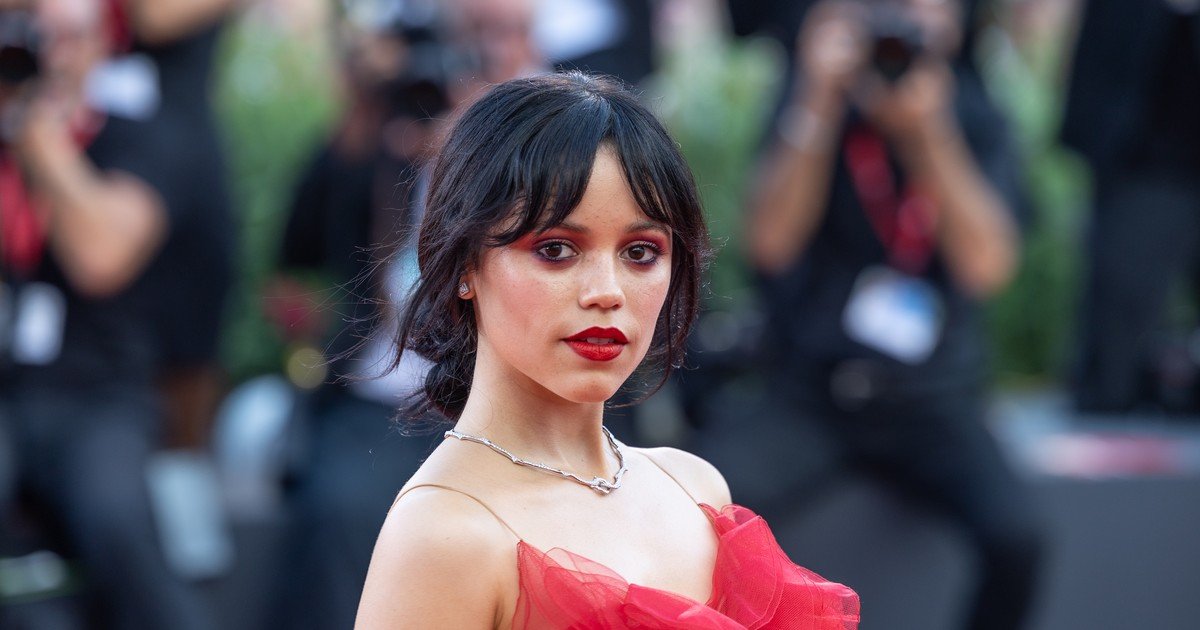
Taika Waititi did not cast Jenna Ortega in Klara and the Sun despite her gift for comedy — he cast her because of it. The director has revealed that after watching the Wednesday star “for a couple of years,” he concluded she was a “brilliant clown,” and he bet his adaptation of one of the most beloved novels of the decade on her ability to keep that clowning “grounded and emotional.” The film opens in theaters on Oct. 23.
The source material raised the stakes. Kazuo Ishiguro, winner of the Nobel Prize in Literature, published Klara and the Sun in 2021 to enormous acclaim. His narrator is Klara, a solar-powered Artificial Friend who watches the human world from a shop window and interprets it with a logic that is flawless and completely wrong at the same time. Adapting that voice for the screen meant finding an actress who could be funny and devastating in the same breath — often in the same shot.
“People Can Overcook It. She Didn’t.”
“It was just a cool opportunity to work with someone who’s smart and good and really brought so much to the role,” Waititi says. “People can try and do what she was doing in this film and overcook it and it just gets away on them and it becomes really stupid. But this was grounded and stayed emotional, and I think that’s what endears you to the character.” It is a precise description of the trap built into the part: play Klara too broadly and she becomes a sketch; too solemnly and she becomes a lecture about technology.
 (Gabriel Brooks / Wikimedia Commons (CC BY 4.0))
Ortega’s solution was famously domestic. Directed to think of Klara as a toddler, she modelled the character’s clumsiness on her own nieces and nephews, reversed a friend’s “glass hands” habit into raised index fingers, and treated Klara’s sensors as fingertips tasting the world. What sounds like improvisation was, in Waititi’s reading, control: a humanoid robot assembled from a hundred observed human truths, none of them exaggerated past the point of belief.
A Fable With Teeth
Ishiguro’s novel is often misread as a gentle dystopia, but its real subject is what people ask love to do. Klara is bought by a mother, played in the film by Amy Adams, for her daughter Josie, played by Mia Tharia, whose mysterious illness shadows every scene. The artificial friend is asked to observe Josie so completely that she could, if the worst happens, continue her — a commission that turns devotion into something quietly terrifying.
That is where empathy becomes the film’s special effect. Klara feels no self-pity and asks for nothing; her entire inner life is attention paid to others. Inside a family strained by grief that has not finished happening, her optimism reads first as innocence, then as courage, and finally as an indictment of every adult who has stopped looking at the world — or at Josie — quite so carefully.
 (Harald Krichel / Wikimedia Commons (CC BY-SA 4.0))
The Company She Keeps
The cast around Ortega signals the film’s ambitions. Adams brings the moral weight; Natasha Lyonne and Steve Buscemi add eccentricity and warmth; and the production was guided by a casting director‘s dream logic in which every supporting player can steal a scene without breaking the fable’s spell. As a family drama wrapped in science fiction, the film needs that balance — the future it depicts is only ever a slightly brighter version of a hospital waiting room.
For Ortega, the film also answers a question that has followed her since Wednesday: can the most mannered young star of her generation play unguarded sincerity? Her own stated motivation was restlessness — she was “kind of bored,” she admits, and wanted a character unlike anything she had attempted. Boredom, in this telling, was a career strategy: the refusal to be embalmed by a signature role while she is still in her early twenties.
 (티비텐 TV10 / Wikimedia Commons (CC BY 3.0))
Why the “Clown” Label Fits
The word “clown” in Waititi’s compliment is doing serious work. Clowning, in the classic sense, is not pratfalls for their own sake; it is the art of exposing need. A clown wants something simple, pursues it with total commitment, and lets the audience watch the wanting. Klara wants the sun, wants Josie well, wants to be chosen and kept — and Ortega plays each wanting plainly, without the protective irony that defines so many of her contemporaries. Her toddler research served this directly: small children are natural clowns in precisely Waititi’s sense, all appetite and wonder, entirely unembarrassed by their own sincerity.
It also reframes her earlier work. Wednesday Addams is, structurally, a clown inverted — a character whose comedy comes from refusing to want anything visibly at all. Critics who treated that stillness as a limitation missed the control underneath it; Waititi, watching “for a couple of years,” saw the control and wondered what it would look like pointed in the opposite direction. Klara is his answer: the same discipline, spent on openness instead of defiance, and aimed at an audience that will likely need tissues rather than a pause button.
The stakes are literary as well as commercial. Ishiguro’s readers are famously protective, and his novels have a mixed screen history — the great ones succeed by trusting stillness rather than explaining it. A director known for comedy and an actress known for a streaming phenomenon might look like risks; on the evidence of their interviews, they instead protect the story’s oddity, treating Klara’s faith in the sun as a fact of her inner life rather than a metaphor to be underlined.
Emotion as the Special Effect
When Klara and the Sun reaches theaters on Oct. 23, audiences will judge whether Waititi’s faith was justified. The early signs — a director praising restraint, a star describing her research with a craftsman’s specificity — point to an emotional performance built from observation rather than machinery. If it works, the credit begins with a compliment that sounds like a joke and lands like a prophecy: a brilliant clown, playing a machine, reminding everyone watching how to be human.